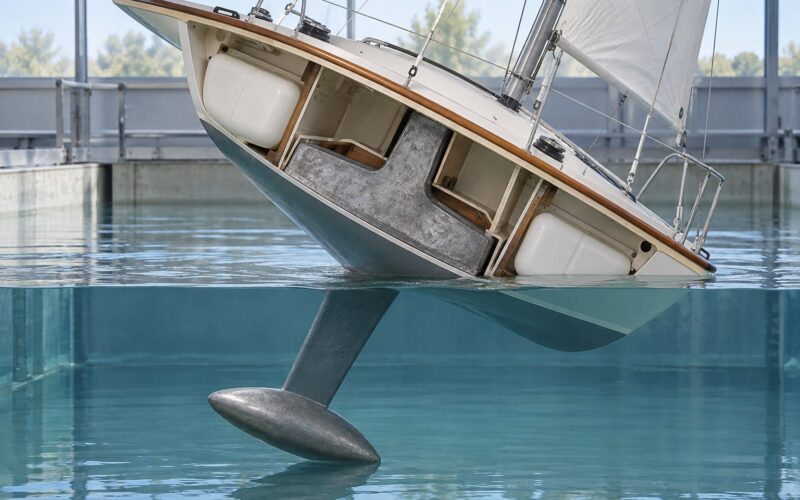
Weather helm is the tendency of a sailboat to turn up into the wind on its own, caused by the centre of effort in the sails sitting too far aft of the centre of lateral resistance of the hull. The helmsman ends up holding the tiller to leeward just to keep the boat straight. Diagnosing and fixing it takes about an hour, and most of the work is observation rather than tools.
Small boats feel weather helm more than big ones. A few pounds of sail area out of balance shows up as a tiller that never rests, and on a 20-footer that can mean a helmsman working the tiller for hours instead of trimming sails.
So when someone asks what is weather helm and how to fix it, the honest answer starts with a diagnosis rather than a part. Most weather helm is not a mystery. It is one of four things: a mechanical fault, bad trim, an unbalanced load, or a rig that was built with more aft balance than the sailing you do. Work through them in that order and you will usually find the cause. This guide walks through the same sequence, updated for 2026.
Table of Contents
What You Need
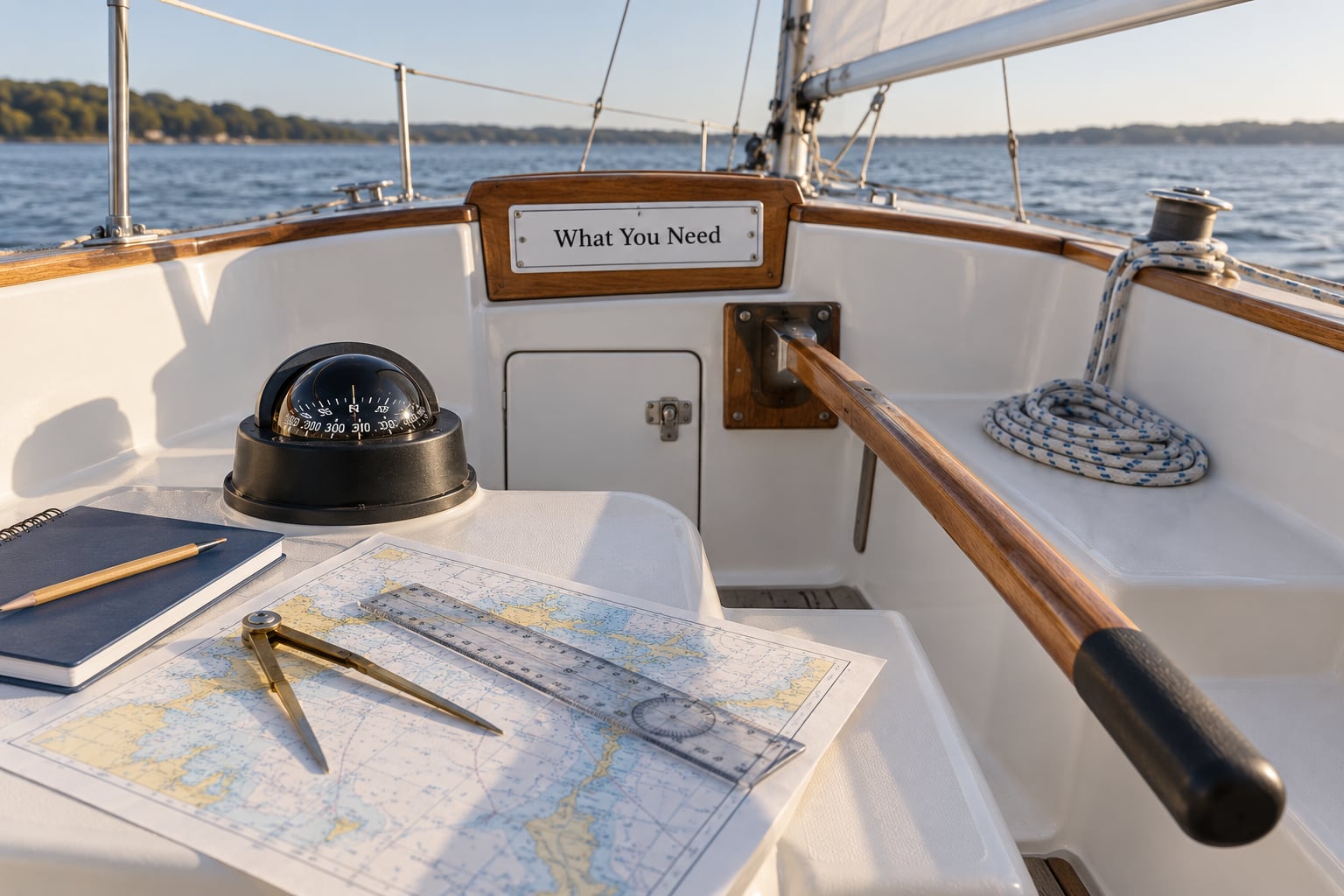
Before touching anything, gather what you need to observe the boat properly. The tools are modest, and most of them are free.
- A calm or sheltered stretch of water for the test sail. Pointing at a breakwater, a bay, or a flat morning is worth far more than a windy afternoon offshore.
- Consistent wind, ideally a steady breeze rather than a building one. Gusty conditions produce gust-induced round-ups that look exactly like weather helm and are not.
- A compass and a way to mark the heading, so you can hold one course and compare settings against a fixed number.
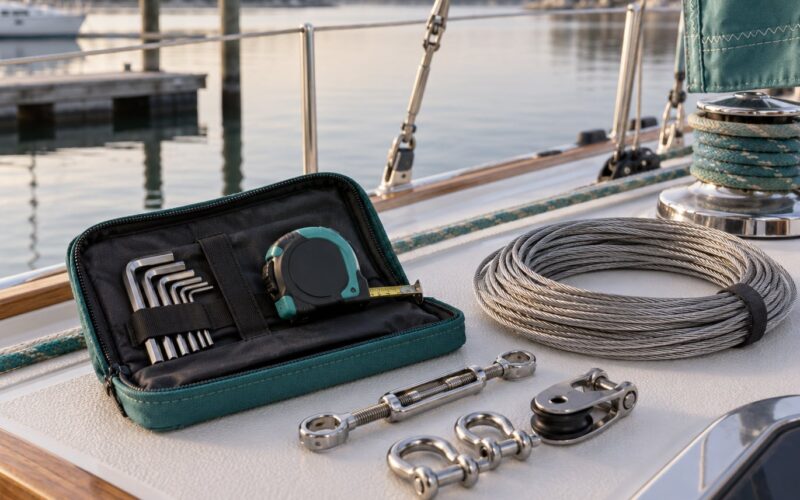
- A tape measure or straightedge for boom-to-centerline and traveller position.
- Basic hand tools for the rudder pintles, tiller extension, and steering linkage.
- The boat’s design and equipment records: the designed mast rake angle, headstay length, and the sail plan. Manufacturers publish these, and guessing at them is how boats end up out of balance.
- Your old trim notes, if you keep any. Previous owners’ or previous seasons’ notes on sheet and vang settings are a useful baseline.
Step-by-Step: How to Diagnose and Fix Weather Helm
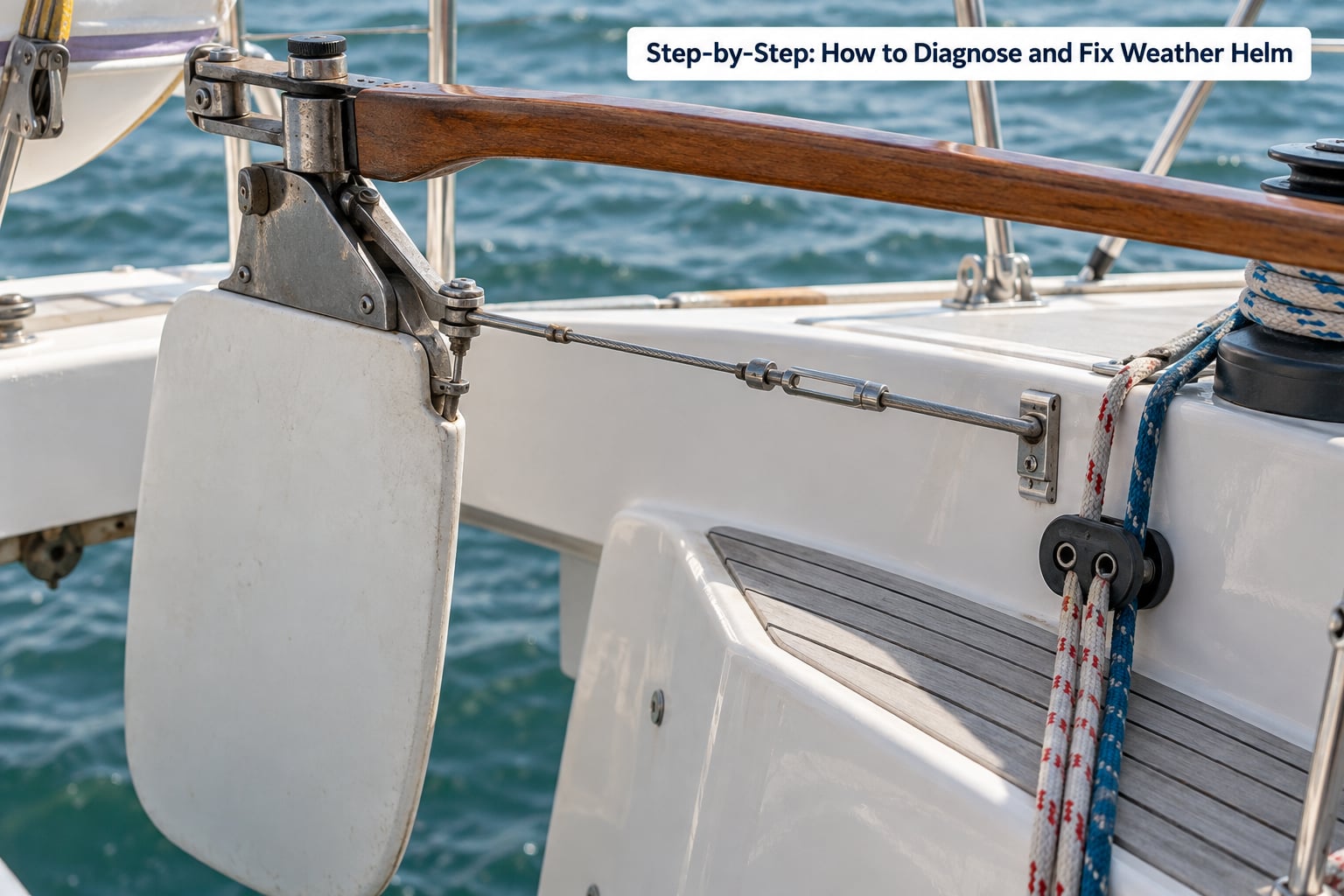
Run this in order. Each step answers a different question, and the order matters because a mechanical fault will make every sail-trim adjustment look like a failure.
Step 1: Confirm the Direction and Amount of Pull
First establish that the boat is turning into the wind and not away from it, then measure how hard. Hold a steady close-hauled course in steady wind and note where the rudder sits relative to the rudder stock when the boat is sailing straight. That position is your reference point, and every later comparison is made against it.
To compare settings, ease the mainsheet in small increments and watch where the rudder goes. On many small boats there is a mainsheet position where the helm goes neutral and the rudder returns to the centreline. That is the helm transition point, and the useful result of the whole exercise is knowing where it sits and marking it on the boom or the traveller car with tape. A blog post from Thistle Sailing makes the same point: trim the main harder and helm increases, ease out and it goes neutral, so mark the sheet and return to it every time.
Weather helm turns the bow up into the wind. Lee helm is the mirror image, pushing the bow away from the wind down toward the leeward side. The two have different causes and opposite fixes, so confirming the direction first saves a lot of wasted work.
The table below sets the two side by side.
| What you feel | Weather helm | Lee helm |
|---|---|---|
| Which way the bow wants | Up into the wind | Down away from the wind |
| Where the centre of effort sits | Aft of the centre of lateral resistance | Forward of it |
| What the tiller does | Must be held to leeward | Must be held to windward |
| Common triggers | Over-canvassed, aft-heavy headsail, excessive rake, board not fully down | Large genoa pressing the bow down, oversized jib, keel or board too far forward |
| Speed effect | Rudder and sails push against each other, drag rises, boat slows | Same penalty, opposite direction |
| First thing to change | Depower the main and move weight or area forward | Reduce headsail area and shift weight aft |
How much is too much is a judgment call, not a number. A persistent tug that never lets go of the tiller, a helm that reverses when you cross tacks, and a boat that rounds up on its own in a steady breeze are all past normal. A light hand that settles after a gust is not a problem.
Step 2: Check Wind, Sails, and Loading Conditions
Before you blame the boat, blame the conditions. Stronger wind, more sail, a different headsail, and crew weight all change the balance faster than any adjustment you will make at the tiller.
Weather helm grows with wind speed for a mechanical reason. As the boat heels, the wetted surface on the windward side becomes larger than the leeward side, so the hull’s sideways resistance is no longer symmetric and the centre of lateral resistance moves. Sailors on the Sailing Anarchy forums describe the effect the same way: as wind speed increases, so does weather helm, because the heeled hull develops an asymmetric wetted surface. A chop makes it worse again, since the rudder spends part of each cycle unloaded.
Match the symptom to the likely cause before you change anything.
| Symptom | Likely cause | First thing to change |
|---|---|---|
| Boats fine up to a certain wind, then rounds up suddenly | Over-canvassed, or wind now past the design range | Reef early, before the helm gets heavy |
| Heavy only upwind, fine reaching and running | Sail balance on the close reach | Ease the main, cam it out, sheet the vang |
| Heavy on one tack only | Asymmetric loading, water in the bilge, or a halyard that pulls unevenly | Check the tack of the main, the sheets, and the bilge |
| Fine in flat water, tiring in a chop | Rudder unloading and wind gradient across waves | Slow down, ease the helm, expect a tug in waves |
| Started right after new sails | New cut, wrong luff curve, or a bigger headsail | Compare the new sail’s draft position to the old one |
| Bow feels pressed down when the headsail is out | Large overlapping genoa depressing the bow | Cut the headsail size, as owners report on Cruisers Forum threads |
A headsail change is the most common trigger and the easiest to miss. A larger genoa adds both area and a moment that presses the bow down, moving the centre of lateral resistance forward and worsening weather helm. Reducing the genoa size has removed the problem outright for owners posting on the Cruisers Forum.
Step 3: Inspect Steering and Rudder Alignment
This is the step owners skip and regret skipping. The single most reported successful fix across the small-cruiser forums is not a trim change at all: the board or blade was not fully down.
- Rudder blade fully down and locked. Check it on the hard, not from the cockpit. A partly raised blade loses lateral area and changes the boat’s balance, and an unlocked blade can flutter.
- Centerboard or daggerboard fully down and free all the way to the stop. Boards stick on salt, a bent pin, or a mis-seated trunk. When the board is up, the centre of lateral resistance moves forward and weather helm appears for no design reason. MacGregorSailors threads return to this check more than any other.
- Pintles and rudder bearings free and lubricated, with no stiffness on one side.
- Tiller, wheel, and steering cable or chain moving freely, with no binding in the mid-position where you actually sail.
- Play in the steering. Excess play in the tiller extension or missing chain guides feels like heaviness and can hide a linkage problem.
- Steering stops and quadrant geometry, so the rudder can reach the angle needed to hold the boat straight in your normal wind range.
If the steering moves freely and the blade and board are confirmed down, move on. Otherwise no amount of sail trim will hold.
Step 4: Inspect Rigging, Center of Effort, and Hull Balance
With hardware cleared, the cause is in the rig or the hull. More aft mast rake moves the sail’s centre of effort aft and increases weather helm, a relationship owners on SailboatOwners and other forums discuss often. On a heavily raked boat the rudder alone cannot hold it, which is why tiller-based fixes keep failing there. Compare your actual rake against the designer’s specification before anything else, and never change headstay length or unstep the mast without a qualified rigger, since a shortened headstay increases forestay tension and the mast needs keel support to come out.
On the rig itself:
- Backstay tension bends the mast forward, flattening the main, opening twist, and pulling the headstay taut. Craning an adjustable backstay flattened the main, removed twist, cut forestay sag, and measurably reduced both weather helm and heel for one Sailing Ruby skipper sailing 28 to 35 knots in San Francisco Bay. That is the first rig adjustment worth trying if you have one.
- Upper shroud tension that has gone slack after a mast step or a lost turn of the turnbuckle. Loose standing rigging lets the rig move forward under load, which owners on MacGregorSailors cite alongside the board check.
- Mast bend, straight luff curve, and outhaul. A flat, straight main with twist high in the breeze is a lower-force sail than a deep, full one.
On the hull and the load:
- Board or keel position. Rolling a centerboard aft on a retractable-lever board has been used to move the centre of lateral resistance to sit under the centre of effort, which is the Thistle approach.
- Crew weight fore and aft. Weight to leeward adds heeling moment and increases weather helm with the wind. Weight well forward or down low helps.
- Standing water in the bilge or a flooded deck. A few hundred pounds low and aft will outweigh any sail change you make.
On a catamaran the list is shorter and different: board angle, rudder alignment, and deck shear through the shrouds matter more, and differential helm between the two rudders needs checking before anything sail-related. Multihulls also have very little weather helm to begin with, since the wide stance of the hulls resists turning, so any pull they show usually comes from alignment.
Step 5: Make Small Adjustments and Retest
Change one variable at a time, then sail the same course in the same wind and compare. This is the discipline that separates a fix from a coincidence, and it is the step most guides skip because it is less satisfying than swapping a sail.
Soften the mainsheet, note the helm, and keep the change if it helped. Then move up the ladder: cam the boom out and sheet the vang, add outhaul, then try the backstay, then consider sail area. Record each setting that works, on tape on the boom or in a notebook, so you return to a good balance instead of rediscovering it every time.
Never correct a mechanical fault through sail trim alone. A main that will not stay where you put it is a halyard, a broken batten, or a slug, not a balance problem, and softening the main to compensate will leave you underpowered and still turning up.
Step 6: Know When Professional Inspection Is Needed
Stop diagnosing and get help if any of these show up: the pull is severe enough that you cannot hold the boat on one heading in moderate wind; the boat’s behavior changed suddenly with no sail or equipment change; the tiller binds, jumps, or vibrates; the blade, pintles, chain, or steering hardware show damage or wear; the boat rounds up repeatedly and will not settle; or the boat has been over-canvassed and the deck is loaded up.
A qualified marine technician handles steering hardware, a rigger handles standing rigging, and a naval architect handles hull, keel, and rig geometry. Rig work, headstay changes, and anything that requires unstepping the mast belong with a professional, and the boat needs support under the masthead before it comes out.
Common Mistakes
Diagnosing in gusty wind. A boat rounding up under gusts is not proving it has weather helm. Wait for a steady breeze or a sheltered stretch, or you will chase a problem that is not there.
Changing five things at once. Ease the main, move the traveller, add vang, change the backstay, and shift crew weight together, and the improvement tells you nothing about which change did it. One change, one test, one note.
Treating weather helm as a steering fault, or the reverse. A heavy tiller is usually sails and balance. A binding tiller, jumping tiller, or blade that will not stay down is mechanical. Confusing the two wastes an entire afternoon.
Overcorrecting sail position. Easing the main until the boat is just barely sailing gets you slow and still pulling. Find the balance point, then trim for speed inside it.
Deferring a safety check on hardware. Blade down, board down, pintles free. Skipping this is the most common reason a fix that works for other people fails on your boat, and the most expensive to discover later.
Ignoring the crew. A boat balanced for two and crewed by four changes as people move. Put the weight where the balance wants it and reassign hiking positions.
Overcorrecting in the other direction. A little weather helm is normal and useful. Owners on the Sailnet forums describe it as a dead man’s helm: if the helmsman falls overboard, the boat turns into the wind and stalls instead of sailing away on one tack. Erase it completely and you trade a small annoyance for a small safety margin.
Waiting too long in over-canvassed conditions. Reef early. Depowering both sails solves more weather helm than any rig adjustment, and doing it before the helm is heavy is far easier than doing it after.
Frequently Asked Questions
What is weather helm and what causes it?
Weather helm is the tendency of a sailboat to turn up into the wind, caused by the centre of effort in the sails sitting aft of the centre of lateral resistance of the hull. The helmsman must hold the tiller to leeward to keep the boat straight. Common causes are over-canvassed sail plan, a headsail depressing the bow, excess mast rake, crew weight aft, and a centerboard or rudder blade that is not fully down.
Is a little weather helm bad?
No. A modest amount of weather helm is normal and partly useful, because it gives the boat directional stability upwind and tends to turn it into the wind if the helmsman falls overboard, which stalls the boat. The problem is not the direction of the pull but its weight. A light hand that settles after a gust is fine; a tug that never lets go, or a boat that rounds up on its own, needs work.
How much weather helm is too much?
Treat it as a pattern rather than a number. Excessive weather helm is a tiller that never rests at the centreline, a helm that reverses when you cross tacks, or a boat that will not hold one heading in a steady breeze without constant correction. Sail the same course, note the rudder position when the boat runs straight, and compare that reference angle after each adjustment. A steady tug that never clears is past normal.
What is lee helm and how do you fix it?
Lee helm is the mirror image of weather helm: the bow is pushed away from the wind, so the tiller must be held to windward. It happens when the sails’ centre of effort sits forward of the centre of lateral resistance, often from an oversized jib, a large overlapping genoa depressing the bow, or a keel too far forward. The fixes reverse: cut headsail area, move crew weight aft, and stop pressing the bow down.
Why does my boat round up suddenly when sailing?
Sudden round-ups have four likely causes, and only one is a balance problem. A gust or a wave hitting the rig can push the bow up on its own. An autopilot hunting or current shear can do the same. A poorly balanced sail plan makes weather helm worse as heel grows, because a heeled hull has an asymmetric wetted surface. Finally, a partly raised centerboard or a flapping rudder blade removes lateral resistance when you most need it.
Can weather helm be fixed with the rudder alone?
No. The rudder can only resist a turning moment; it cannot remove it. If the centre of effort is too far aft, the rudder works at full deflection just to hold a straight course, and the drag from that opposing force costs you upwind speed. On a boat with a lot of aft rake, no rudder setting will fix it, because the geometry, not the control, is wrong. Move the balance instead, or change the rig with professional help.
Conclusion
Start by confirming the pull is real and consistent: note the direction, note where the rudder sits on a straight course, and rule out gusts. Then check wind and loading, especially sail area and where the crew is sitting.
Next, inspect the steering system on the hard, with the blade and board confirmed fully down. After that, make one controlled adjustment, retest on the same course in the same wind, and note the result before moving on. That order — mechanical, then trim, then balance, then rig — finds the cause instead of guessing at it.