Marine robotics jobs need a mix of mechanical design, embedded and software programming, control theory, sensor integration, and steady field judgement. Most postings for these roles ask for a specific toolchain rather than generic engineering ability, usually ROS 2, C++, Python and Linux, plus the patience to debug hardware in salt water. Here is what skills marine robotics jobs need, one by one, with a way to prove each one.
That last point is where most career advice falls short. General robotics guides stop at simulation and ground robots, while the marine side adds pressure housings, buoyancy, corrosion, acoustic links and launch and recovery from a moving boat. A candidate can be excellent at both and still not know which of the twelve skills below is the real gap in their CV.
Table of Contents
- What Skills Marine Robotics Jobs Need at a Glance
- 1. Mechanical Design and CAD Skills
- 2. Electrical Systems and Low-Voltage Design
- 3. Embedded Programming and Real-Time Control
- 4. Robotics, Autonomy, and Navigation Skills
- 5. Controls Engineering and Signal Processing
- 6. Marine Sensing and Data Interpretation
- 7. Ocean and Field Testing Skills
- 8. Systems Engineering and Project Integration
- 9. Safety, Risk Assessment, and Regulatory Knowledge
- 10. Python, Data Science, and Simulation Skills
- 11. Communication and Cross-Team Collaboration
- 12. Adaptability and Lifelong Learning
- Frequently Asked Questions
- Do I need a marine engineering degree to get a marine robotics job?
- What is the best degree for marine robotics jobs?
- How can I build a marine robotics portfolio without ocean experience?
- Which programming languages should I learn for marine robotics?
- Are marine robotics jobs mostly hardware, software, or field work?
- How can someone with limited CAD or controls experience get started?
- Conclusion
What Skills Marine Robotics Jobs Need at a Glance
Read the table as a map rather than a checklist. Nobody hires for twelve skills at once, and the right column tells you which two or three matter for a specific vacancy.
| Skill | Where it matters most | How to prove it |
|---|---|---|
| Mechanical design and CAD | Vehicle and payload build, tooling, pressure housings | A released part, tolerance stack and drawing set for a floatable housing |
| Electrical systems and low-voltage design | Power budgets, wiring, battery safety, connectors | A sealed power distribution board with a documented load calculation |
| Embedded programming and firmware | Thruster drivers, sensor interfaces, control loops | Firmware running on a real MCU with logged timing data |
| Autonomy and navigation | Mission logic, path planning, state estimation, SLAM | A ROS 2 node that plans a route in simulation and replans around an obstacle |
| Controls and signal processing | Depth, heading and station keeping, sensor fusion | A PID or state-space loop with a step-response plot you can explain |
| Marine sensing and data handling | GPS, IMU, DVL, sonar, water-quality payloads | A calibrated dataset with timestamps, uncertainty and a written QA note |
| Field and sea testing | Launch, recovery, mission logs, contingency plans | A deployment log, weather record and post-trip fault list |
| Systems engineering | Interfaces between mechanical, electrical, software and energy | A requirements file and an interface control document for a build |
| Safety and regulatory knowledge | Lifting, emergency stops, COLREGs, permits | A written risk assessment and a pre-deployment checklist |
| Python, data and simulation | Log analysis, mapping, virtual environments | A published notebook or repo that turns raw logs into a plot |
| Communication and teamwork | Scientists, operators, clients, regulators | A test procedure and a design review someone else actually read |
| Adaptability and learning | New hardware, failed deployments, shifting missions | A short write-up of a failure, its cause and the change you made |
The four job families these skills map onto are control and navigation, sensor and payload integration, simulation and vehicle software, and AI or computer vision. A fifth, vehicle operations, covers ROV and AUV pilots and technicians, who need the same sea skills with a different engineering depth.
1. Mechanical Design and CAD Skills
Marine robotics engineers design in CAD, then take the model all the way to a part somebody can manufacture. Reading a tolerance stack, choosing a material and justifying a fillet matter as much as the shape itself.
Weight is a design constraint, not a preference. Every kilogram below the waterline has to be carried by a thruster, and that thruster also handles towing a payload through current. Structural loading is different on a surface vehicle than on a subsea frame, where buoyancy, drag and pressure all push at once.
A good portfolio exercise is a floatable ocean-sensor enclosure: a sealed box that survives a drop, a wave impact and a soak cycle, and that keeps electronics dry while venting pressure. Show the CAD, the material choice for a saltwater environment, the seal stack, and the reasoning for each change you made after testing.
2. Electrical Systems and Low-Voltage Design
Every autonomous surface vehicle or underwater robot runs on a power budget somebody had to build by hand. Engineers size batteries, pick charging and isolation methods, and route wiring that survives vibration, water and a decade of salt.
The details that catch newcomers out are unglamorous: grounding and bonding to avoid noise, fusing and circuit protection for each branch, voltage drop over a long tether, and connectors rated for the environment rather than for the bench. A short that works dry will fail wet, and it usually fails on a trial when nobody wants to lose the day.
Build a sealed power-distribution box for an autonomous surface vessel. Document the load calculation, the connector selection, the fusing and the failure behaviour when a branch shorts. That one exercise teaches more about electrical design in marine work than a semester of theory on its own.
3. Embedded Programming and Real-Time Control
Marine robotics jobs need C and C++ more than most, because the code that drives thrusters, depth sensors and pressure housings has to run predictably on hardware you cannot reach once it is wet. Rust is appearing in the same role for the same reason: memory safety on long deployments.
Alongside the languages come firmware development, real-time operating systems or bare-metal scheduling, and communication protocols such as CAN, serial, Ethernet and NMEA 0183. Debugging is a core skill rather than an afterthought, and it happens through logs, bus analysers and a lot of patience.
A good demonstration is motor and sensor control on a small surface robot: a closed loop that holds heading, logs its own timing, and fails safely when a sensor drops out. Employers reading your repository care more about the failure handling than the happy path.
4. Robotics, Autonomy, and Navigation Skills
Autonomy work splits cleanly in two, and job postings reflect that. The basic level is mission logic, waypoint following and simple obstacle avoidance, built on ROS 2 with off-the-shelf sensors. The advanced level is path planning, localization, state estimation and SLAM in environments where the map keeps drifting.
Underwater adds a constraint that surprises people: GPS does not work below the surface, so positioning comes from an inertial navigation system aided by a Doppler velocity logger, or from acoustic USBL. Navigation is not one skill, it is a stack, and the stack is where the interesting engineering lives.
Pick a simulator such as Gazebo, build a vehicle model, and show a node that plans a route, detects an obstacle and replans without stopping. Then write the paragraph explaining what your planner does when the map is wrong, because that paragraph is what an interviewer reads.
5. Controls Engineering and Signal Processing
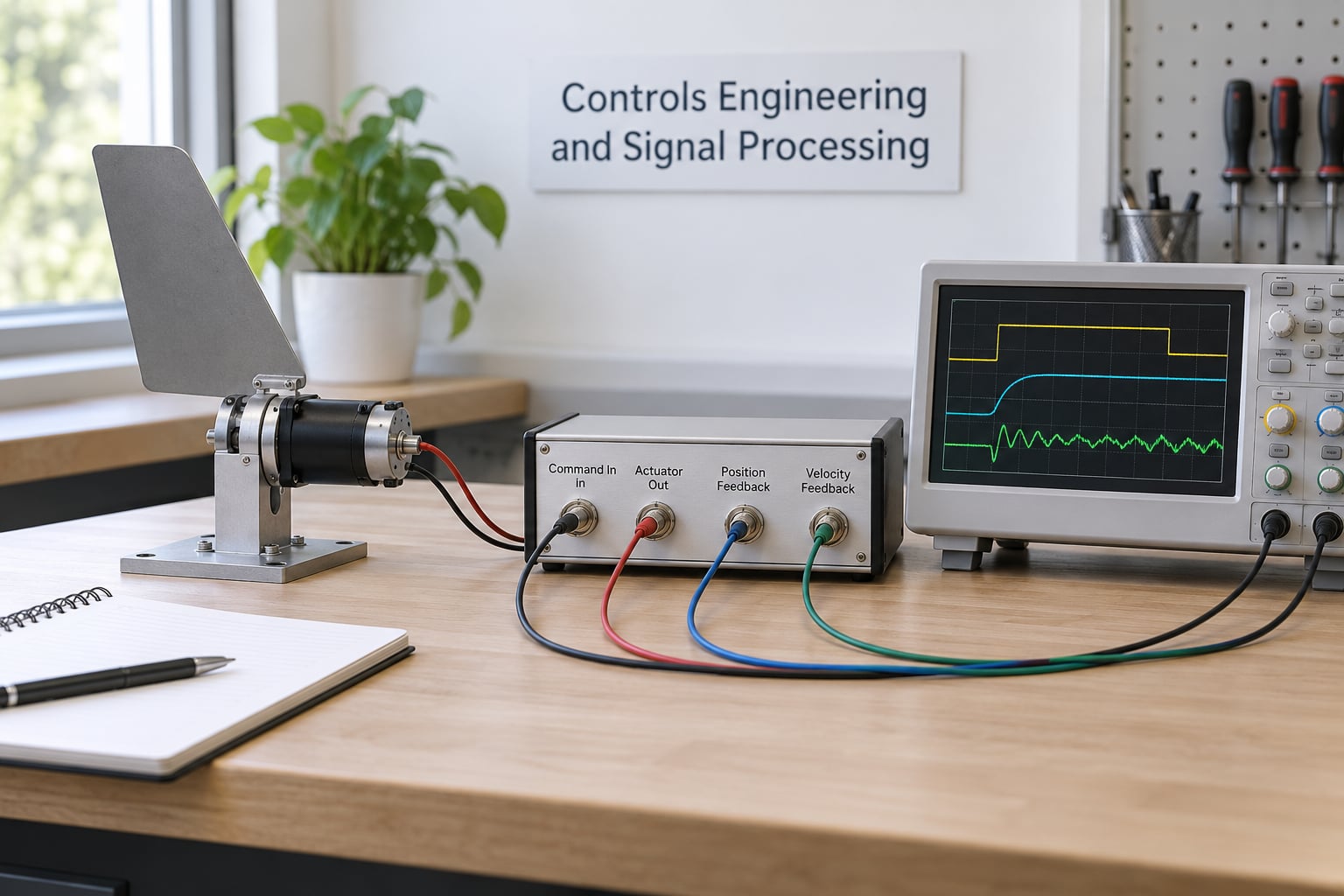
Controls is where a robotics student with a mechanical degree discovers they have a second subject, and where a software hire discovers they have a third. Marine vehicles need PID loops for straightforward heading and depth hold, and state-space methods or model predictive control for anything that has to behave well while the current changes underneath it.
Signal processing is the other half. Sensors on a small hull in rough water produce noisy, drifting measurements, so filtering, sensor fusion and interpreting a confidence interval are daily work rather than theory. Saying a number is uncertain is more professional than reporting it to three decimal places.
Build a test bench for one control loop and publish the step response, the tuning method and the failure case. Explaining why you chose your gains is worth more on paper than the gains themselves.
6. Marine Sensing and Data Interpretation
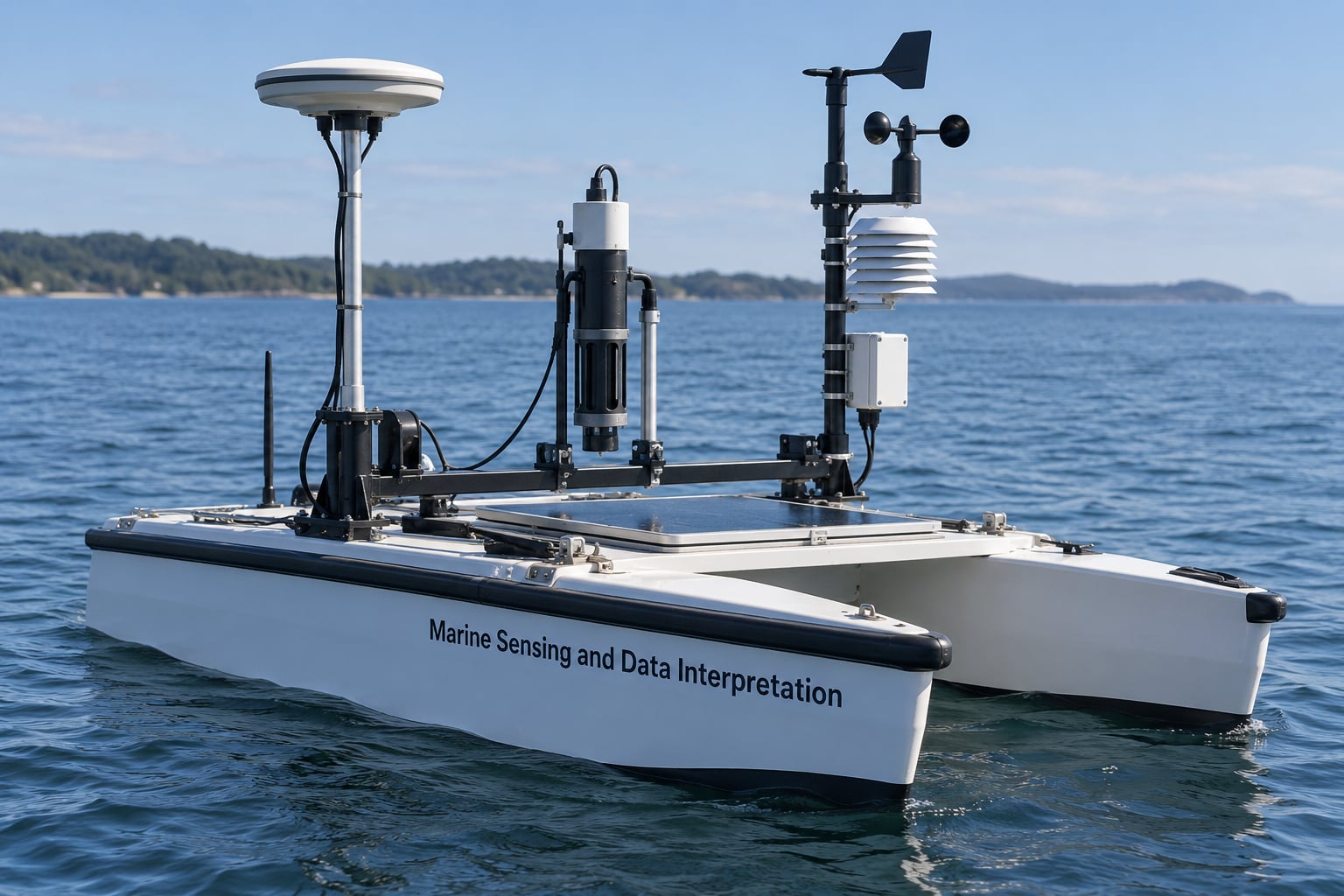
Sensing roles exist because the vehicle is only as useful as what it measures. GPS, IMUs, water-quality probes, sonar, radar and cameras each come with calibration procedures, sampling decisions and their own failure modes, and integrating a payload someone else built is a real skill with a real interface problem at the end of it.
Timestamps decide whether a dataset is usable. If sensor clocks drift by a few hundred milliseconds, anything you compute from it is wrong in ways nobody will catch later. Calibration records, sampling rationale and an honest note about what the data cannot tell you are what separate a technician from an engineer here.
Publish one calibrated dataset with its uncertainty stated. Marine research employers and environmental monitoring teams read that kind of artefact closely, because field data is the part of the job they cannot teach you.
7. Ocean and Field Testing Skills
Sea trials are where projects are won and lost, and the skills they test do not appear in any course catalogue. Launch preparation, weather assessment, mission logging, contingency planning and post-deployment troubleshooting all happen with a crew, a boat and a clock running.
The skill is preparation plus honesty in the log. Write down what the vehicle did, when it did it, and what you changed afterwards, including the deployment that went badly. A trip report is a small, believable piece of evidence that you have actually been to sea.
Start small with a buoy deployment you control yourself: a float, a sensor, a plan, a weather check and a written brief. Repeat it in different conditions. The progression people notice on a CV is not the size of the vehicle, it is the number of times you have deployed something and learned from the result.
8. Systems Engineering and Project Integration
Marine robots are subsystem integration problems. Mechanical, electrical, firmware, autonomy, energy and communications all have to agree with each other, and the interfaces between them are where schedules slip.
Systems engineers define requirements, manage those interfaces, run trade studies and own the integration test plan. A trade study is a short document that compares two approaches against cost, risk and schedule, with a recommendation, and it is a skill you can practise on a student build without any ocean experience at all.
Show a requirements file, an interface control document and a test plan for a small vehicle. Employers often ask about these in interviews because they reveal whether you can work in a team of eleven specialties that do not share a vocabulary.
9. Safety, Risk Assessment, and Regulatory Knowledge
Anything that goes into the water with people on the boat carries a risk assessment, and the people who write them are taken seriously. Electrical safety, mechanical guarding, lifting and launch procedures, emergency stops and defined fail-safe behaviour are part of the job, not paperwork someone else handles.
There is a regulatory layer too. For surface operations that means knowing the COLREGs and how a vessel behaves around commercial traffic. Deployments may need permits, and offshore or defence work adds its own rules, including clearances and restricted areas.
Bring a written risk assessment and a pre-deployment checklist to an interview conversation. They are short documents, and producing them unprompted tells a hiring manager you have worked somewhere the cost of a mistake is measured in a survey day.
10. Python, Data Science, and Simulation Skills
Python is the working language of marine robotics even when C++ runs the vehicle. Log analysis, plotting, coordinate conversions, bathymetric map handling, mission replay and test scripting all happen in it, and a candidate who can open a deployment log and find the fault in ten minutes is immediately useful on a team.
Basic statistics matter more than advanced machine learning here. Averaging, uncertainty, outlier detection and cleaning bad rows decide whether a monitoring mission produces a defensible number or a decorative chart.
Simulation is the other half of the skill. Whether you use Gazebo, Unity or MATLAB and Simulink, employers want to know you can test a behaviour cheaply before you book a boat. A public repo with a simulated fault-injection test is convincing evidence, and it costs nothing to produce.
11. Communication and Cross-Team Collaboration
Marine robotics projects put software engineers next to oceanographers, marine biologists, surveyors, welders and vessel crews. A mission fails when the science asks for something the power budget cannot support, and that failure is usually a communication problem first.
The practical skills are writing a test procedure somebody else can run, documenting a design so a new team member can pick it up, and presenting a trade-off to a client without hiding the bad news inside it. Employer career pages in this sector list written communication as a hard requirement, not a nice-to-have, and they are right.
Translating results is a separate skill from producing them. A salinity profile nobody outside your team can interpret will not change a client’s monitoring programme, however accurate it is.
12. Adaptability and Lifelong Learning
Hardware generations turn over fast, sensors get replaced as they salt up, and a mission that was scoped as a survey can become a recovery operation mid-deployment. Marine robotics engineers describe the work as constant multidisciplinary debugging, and people who enjoy that tend to stay.
There is a lifestyle component too. Sea days are long, the work is seasonal, and early career roles often involve a lot of instrument prep and cleaning. If the field rhythm sounds wrong, say so now rather than after your first contract.
What Skills Marine Robotics Jobs Need in Practice
Map the twelve skills onto the role you actually want, then weight them. A control engineer needs items 3, 4, 5 and 10 in that order. A sensor and payload integration engineer needs 2, 6 and 8. A simulation software developer needs 4, 10 and 11. A computer vision engineer needs 3, 10 and 6.
| Job family | What you do | Core skills above | Where the jobs sit |
|---|---|---|---|
| Control and navigation | Depth, heading and station keeping, estimators | 3, 4, 5 | AUV manufacturers, research institutes, defence |
| Sensor and payload integration | Mechanical and electrical fit for instruments, data paths | 2, 6, 8 | Survey and monitoring companies, offshore energy |
| Simulation and vehicle software | Digital twins, test environments, middleware | 4, 10, 11 | Vehicle makers, engineering consultancies |
| AI and computer vision | Detection, classification, inspection imagery | 3, 6, 10 | Environmental monitoring, offshore inspection |
| Vehicle operations | Piloting, tether handling, deck and recovery | 7, 9, 11 | Marine contractors, survey operators |
On paper, hiring managers scan for the named tools on this list. In interview they ask what broke last time and what you changed, which is the single most reliable way to separate people who have deployed vehicles from people who have only built them in simulation.
Frequently Asked Questions
Do I need a marine engineering degree to get a marine robotics job?
Usually not. Most employers list a degree in mechanical, electrical, mechatronics, computer science or software engineering, and treat marine-specific knowledge as something you learn on the job. What they do expect is that you understand pressure, buoyancy and corrosion well enough to design sensibly around them, and that you are honest about how much you have actually built yourself.
What is the best degree for marine robotics jobs?
There is no single best one. Mechatronics and robotics degrees cover the widest ground, mechanical and electrical degrees give you the depth that hardware-heavy roles need, and computer science or software degrees suit simulation and autonomy work. Oceanography, marine biology or ocean engineering pair well when the mission is environmental rather than industrial. Pick the one you would enjoy for four years.
How can I build a marine robotics portfolio without ocean experience?
Build a float, a float that logs temperature and pressure, and take it somewhere with waves. Pool tests, lake tests and estuary tests all count, and each one gives you real data plus a written post-deployment report. Marine employers care far more about whether you have deployed something, recovered it and written down what went wrong, than about the size of the vehicle.
Which programming languages should I learn for marine robotics?
Learn C++ for anything running on the vehicle, Python for data, analysis and tooling, and get comfortable on Linux because most vehicle software is built and deployed there. MATLAB shows up heavily in control and research roles. ROS 2 is worth real effort for autonomy and simulation work. Learn one language deeply rather than five shallowly, then add the second when a project demands it.
Are marine robotics jobs mostly hardware, software, or field work?
It depends on the role, and all three exist as distinct careers. Hardware-heavy positions focus on power, wiring, pressure housings and payloads. Software roles cover autonomy, simulation and data pipelines. Operations and technician work is launch, recovery, tether handling and deck maintenance, and it is the most common way into the industry without an engineering degree.
How can someone with limited CAD or controls experience get started?
Take on one small design task end to end, such as a mounting bracket or a sensor mount, and take it from sketch to printed part. For controls, build a single PID loop on a bench and plot its step response before touching a vehicle. Both skills respond to a few focused months of deliberate practice, and both show up in a portfolio faster than a certificate does.
Conclusion
Start by choosing a target role, then write down its two strongest and two weakest requirements from a real posting. One documented project that shows several of these twelve skills at once beats a certificate and a list of courses, and deploying it somewhere with waves is what makes the evidence stick.