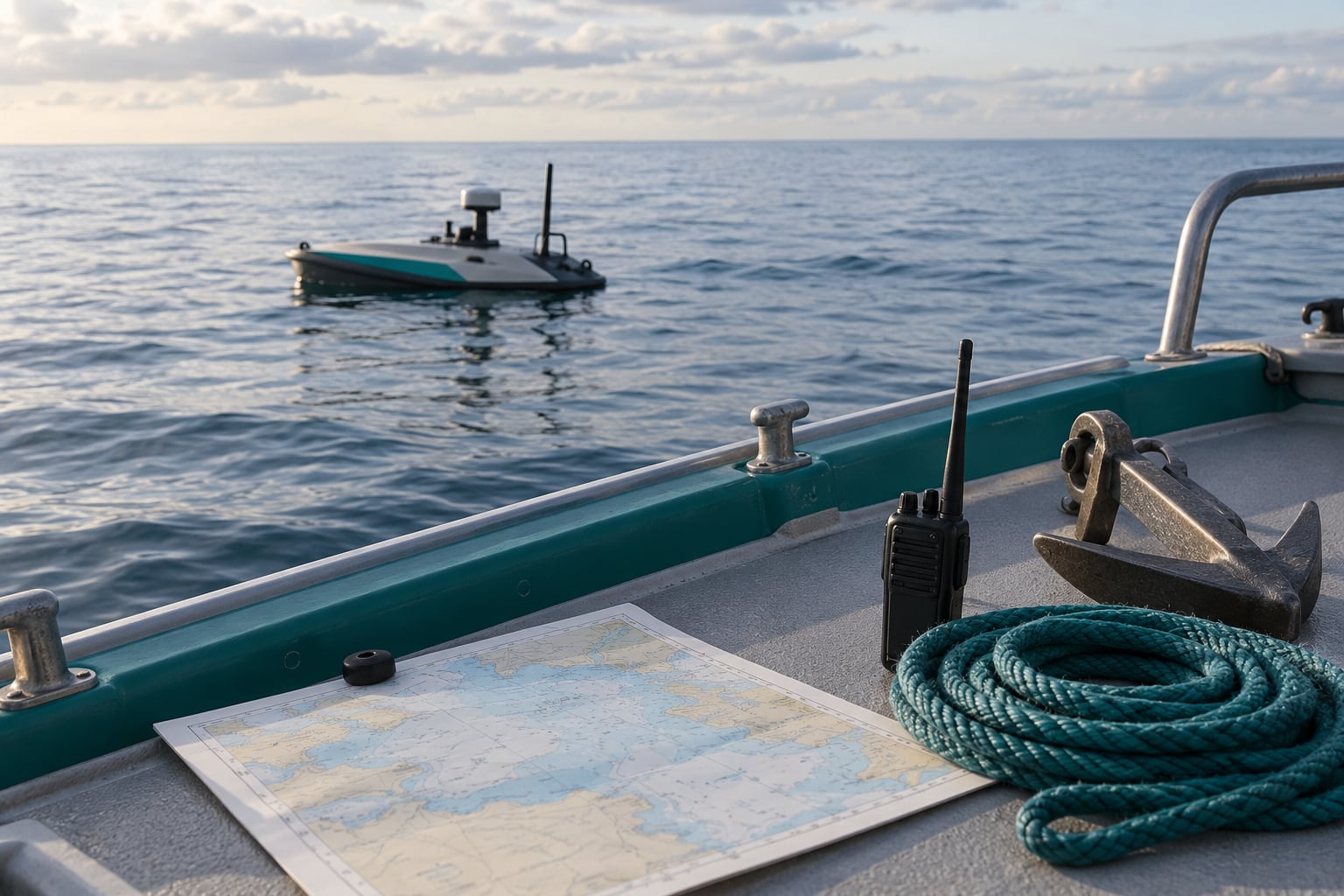
A drifting boat is one that has lost control of its own position, whether the anchor dragged, the mooring line parted, or the engine quit, and it is now moving with wind and current. Knowing how to recover a drifting boat comes down to four moves in order: work out where the vessel is going, tell the right people on VHF Channel 16, stop the drift with an anchor or a drift bag, then rig a tow bridle and bring it back to a safe berth.
This procedure is written for marine engineers, field-test operators and open-hardware makers who bring a disabled sailing robot, an unmanned surface vessel, or a conventional boat back from open water. Most of it applies to a 20-foot sailboat and it applies to a 2-meter ASV with a dead GPS, which is the part people get wrong. Nobody enters the water, nobody chases a stale position, and nobody treats an improvised tow as a controlled one.
Table of Contents
What You Need
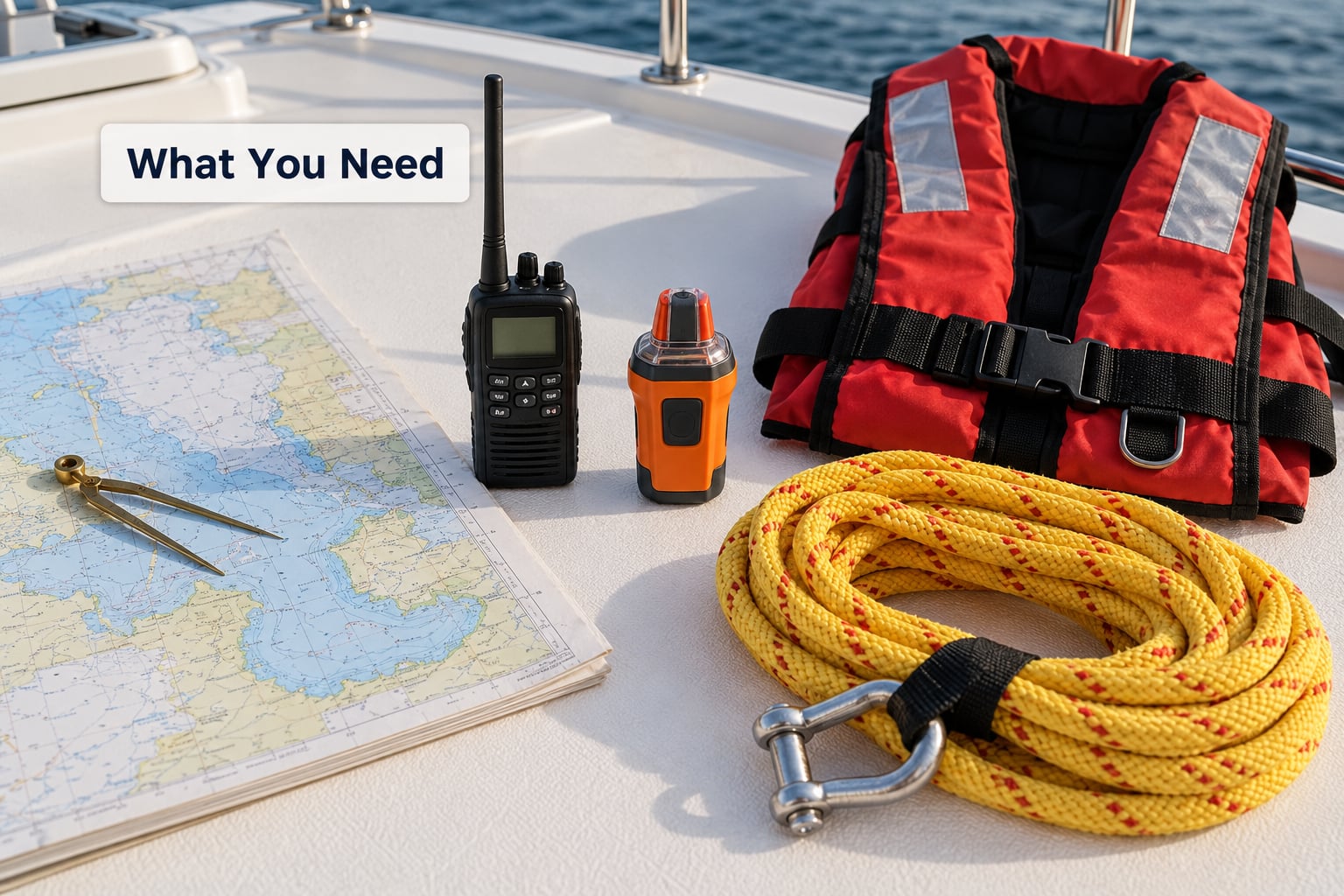
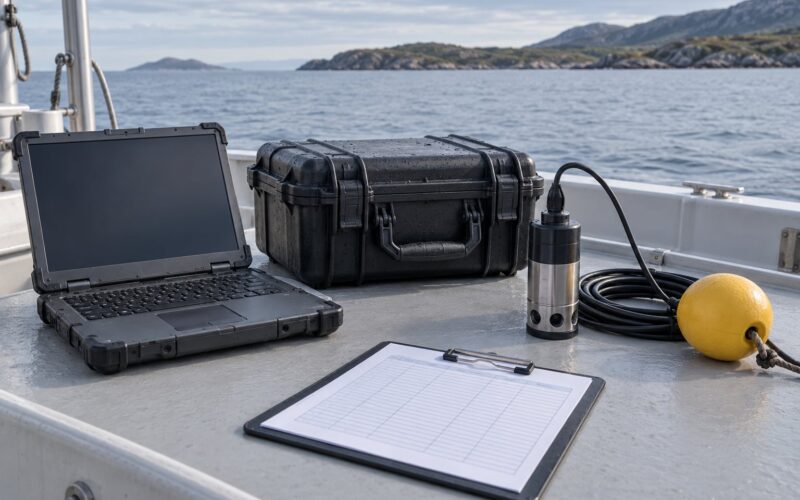
Start with the safety kit, because everything else is worthless without it. A properly sized personal flotation device for everyone aboard, a spare VHF radio in a floating pouch, a waterproof handheld, flares or an AIS transponder, a throw bag of 60 to 75 feet of light line, and a working searchlight. Everyone puts on a PFD before anyone leaves the dock, including the person who is already annoyed about being awake.
Next comes tracking. You need a way to get a fresh position, not the position you had when the beacon first went quiet. A receiver that can pull the AIS target of a Class B transponder, a handheld GPS with a waypoint alert, and a compatible tracker for your own platform are the usual combination. If the vessel carries a cell modem or a LoRa beacon, someone onshore needs the ability to read its last known position and its timestamp, and you need to know the reporting interval before you leave rather than after.
For stopping the drift, carry a modest anchor and enough rode to use it. A 10 lb Danforth at the bow and a 15 lb mushroom at the stern is a sane pairing for a boat in the 20 to 30 foot range. A 5:1 scope ratio means five feet of line for every foot of water, so 200 feet of rode handles 40 feet of depth with margin. In open water with no bottom to reach, a drift bag or drogue set from a bow eye cuts windage and gives you something to steer with, and it is often the better tool.
For the tow, you want a bridle, a line well above the tug’s propeller, and something to control surge. Tow bridle geometry matters more than line diameter. A 60 to 75 foot throw line for the initial connection, a tow line of at least 20 mm for a working tow, a heavy fender or a length of rope stuffed with a jacket between the hulls, and a knife within reach.
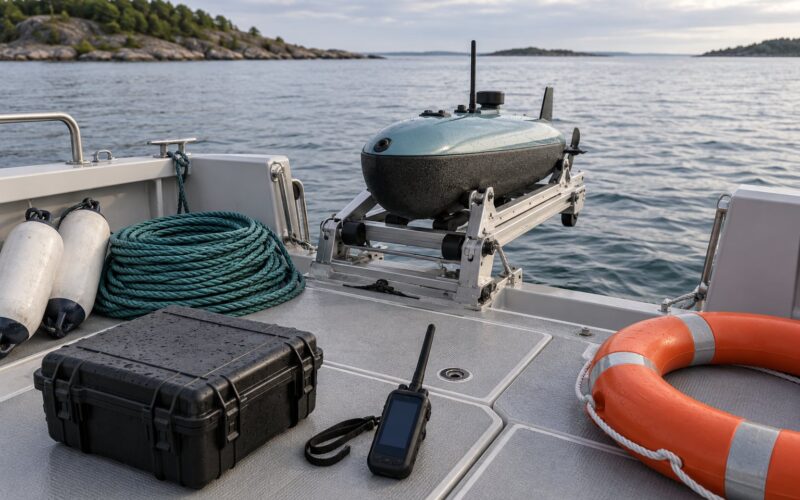
Unmanned vessels change the equipment list rather than the process. A small USV has no one to throw a line to, so you need a light vessel that can approach without being destroyed by prop wash, a grapple hook as a backup, and the ability to cut free. Wrap every line on an autonomous craft so a bight cannot find a propeller. For a sailing robot, note the fin-keel profile and the rudder angle before you throw anything, because a wrapped rudder turns your recovery into a recovery of your own line.
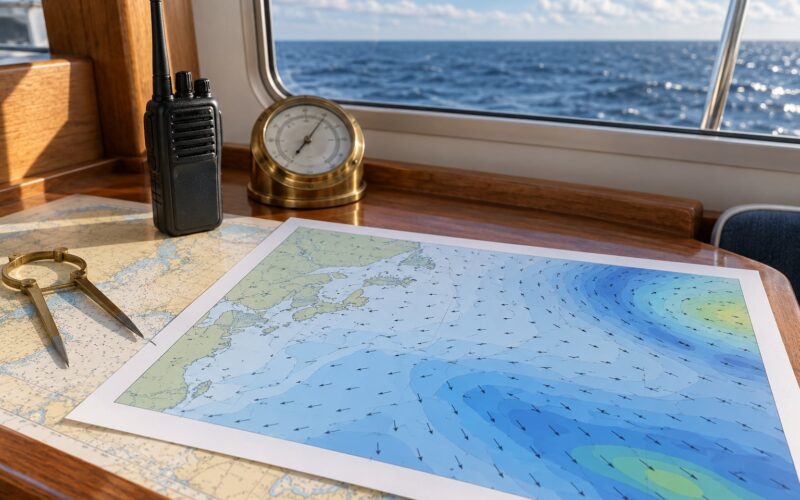
Finally, bring paper. A chart of the area with the hazard overlay you can read, a list of the radio contacts you might need, and a pen. A pen sounds like a joke until you are standing on a wet deck relaying a position to a dispatcher and cannot find a screen.
Step-by-Step: How to Recover a Drifting Boat
1. Confirm the Drift and Establish Priorities
Confirm what has actually happened before you act, because the first three questions change everything. Is anyone aboard? Is the vessel moving under power or purely on wind and current? And what is between it and somewhere bad?
Your first action depends on whose boat it is and what state it is in. This table is the fork that most guides skip:
| Situation | First action |
|---|---|
| Your boat, engine running, drifting slowly | Get steerage back first, then deal with the failure once you have headway |
| Your boat, engine dead, nearshore | Deploy the anchor immediately, then call for help |
| Your boat, engine dead, offshore | Call it in on VHF 16, rig for tow, drift with a drogue to hold station |
| Someone else’s occupied boat in danger | Call the Coast Guard on 16, offer assistance, protect your own vessel first |
| Someone else’s empty boat near a channel | Report it, stand off, do not board it until you know it is safe to board |
| Capsized, in the water, reachable | Right it if conditions allow, otherwise mark it and call rescue |
You also want the marine forecast in the same pass. If the visibility is going to close, if the wind is above your craft’s ability to hold a steady approach, or if the sea state is building, the honest answer changes from retrieve to mark, report and wait for a better window.
2. Update the Position and Plan an Interception
Get a fresh position, then work out where the vessel will be when you arrive, not where it was. An hour-old position on a boat making two knots of leeway is more than two nautical miles of error, and that error grows with time.
Set and drift is the useful distinction here. Set is the direction the current carries the hull; leeway is the angle between where the boat is pointing and the track it is actually making across the water, caused by wind pushing on the rig, the hull, or any exposed sensor mast. A sailing robot with a tall antenna mast can make a surprising amount of leeway for its size. Plot a few position reports, take the vector between them, and that vector is your intercept heading.
Then work backwards. Decide how long the run will take, multiply speed by time, and place your own initial course to the future position rather than the last one. Build in a search area: if the tracking stops, the drift set becomes the search pattern’s anchor, and you expand outward from the last known position along the set.
Mind the lee shore. A drifting boat pointed at a shoal, a bridge span, or a breakwater is a hull loss in a few hours, and that is the situation where you call for help first and tow second.
3. Prepare to Recover a Drifting Boat: Crew and Equipment
Do the pre-departure check like you mean it: fuel, both propulsion systems if you have them, bilge pumps, VHF tested, navigation lights, engine kill lanyard attached. Check the tow line for chafe and lay it where it can run free, then secure the bitter end back-spliced or seized. A line that parts on the first surge costs you the tow and puts a floating rope in the water.
Brief the roles out loud. One person owns the line and does nothing else, one person navigates and owns the approach, and one person handles communications. That separation is what keeps a controlled operation from turning into an improvised one.
Set your abort conditions before departure and say them out loud. Abort if the tow load spikes, if visibility drops, if a gust puts more than a set angle on the tow, or if the target’s behaviour is not what the last two reports said it would be. Deciding in advance is the only way the decision gets made quickly when it matters.
4. Make a Careful Approach
Approach from the protected side, not the downwind side, and come in slower than feels necessary. Reduce to steerage way as you get close, because the moment you stop moving you lose control of your own approach angle.
Identify hazards before you are alongside: an antenna or sensor mast sticking out, a rudder hanging in a strange angle, a mooring line running off into the water, or a loose sheet snapping in the wind. Note the wind and current direction on every pass, and remember that the same set and drift that carries the target will carry your line to it.
Keep a person on the radio or a signal every minute. If the target is a USV with a camera or an AIS feed, put that feed on a screen where the person navigating can see it, and treat a sudden loss of feed as a reason to hold off and look.
5. Secure the Vessel for Towing
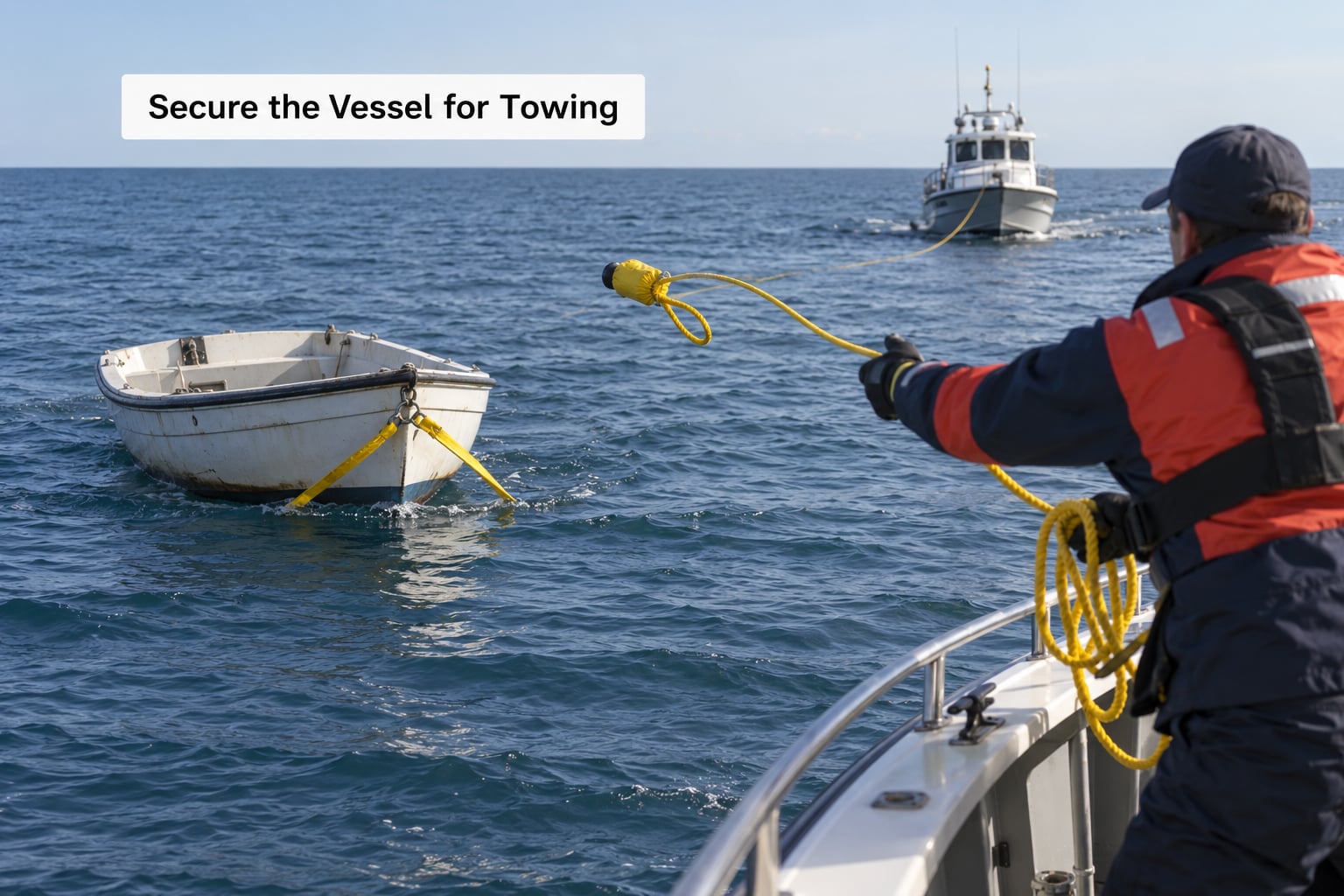
Make the connection in three moves. Put the tug up on the protected side and hold station. Send a weighted throw line across, let the person on the target boat or the grapple make it fast, then take the strain up hand over hand onto the tow line.
A tow bridle spreads the load across two strong points instead of concentrating it on one cleat, which is what actually parts fittings. Lead the tow line through a chafe guard at the bow, and make sure it can never jump to the opposite side, because a line that crosses the bow has broken more tugs than any weather has. On a sailing robot, keep the bridle clear of the rudder post and off anything that moves with the windage.
Take up the slack slowly and let the load build over a minute rather than a second. The first surge tells you whether the bridle is right. If the strain peaks and releases hard, shorten the line or add a second connection before you leave the area.
6. Tow Slowly and Monitor the Drift
Tow at the lowest speed that keeps the towline clear of the water, which for most recreational craft is barely above idle. Speed you do not need is speed that puts a shock load through the bridle every time the tug’s hull leaves a wave.
Watch the line, not the boat. The person on the tow keeps a hand on the line and calls out tension changes out loud, and the first sign of a problem is usually a change in how the line sounds before anything shows on a gauge. Keep the towed vessel slightly on the protected quarter so the tug breaks the sea for it, and keep your own propeller off the line in any kind of turn.
Watch your own power budget and the weather together. A tow that is eating fuel faster than you planned is a tow that ends badly in an unexpected sea state, and the vessels you see drifting toward a lee shore are usually the ones that ran out of options before they ran out of distance. Abandon the tow and call for assistance if the weather overtakes you, if the towline takes set you cannot steer, or if your fuel reserve drops below what you need to reach the nearest safe harbour.
7. Finish the Recovery Safely
Bring the vessel alongside with the tow still attached, then secure it before you do anything else. Fenders between the hulls, a spring line ashore, a second line tied off, and the anchor down in shallow water. A recovered boat that breaks free again on the tow home costs you the whole operation twice.
Document the position, the time, the condition and the fuel state before the owner or the project team arrives. Write down what the vessel looked like when you found it, because the first documented condition is the reference everyone argues from later.
Report it. If the vessel is unmanned, a notification to the Coast Guard or the relevant authority closes the loop and protects you from the awkward part of the conversation later. If you took possession of it, photograph the hull number and any registration, and hand it over rather than quietly making it yours.
Righting a Capsized Drifting Boat
A capsized small boat is a different job and often a worse one. The standard technique for a 12 to 17 foot craft is a rollover: two straps of 2.5 to 3 inch flat webbing, one under the hull, one over the coaming, both to a lifting point on your recovery craft, and a hard, fast pull on the counting of three. It works because you are rolling the boat back onto its edge rather than lifting it clear of the water.
Two things wreck a rollover attempt. A slack start lets the boat fall the wrong way, and a sternwind puts the rudder and skeg where they can damage you. If you cannot get on the protected side with a clean pull, mark the position, call it in, and wait for a crew with the right craft.
If the Boat Is Empty or Abandoned
An empty boat is not automatically a derelict, and you do not get to keep it just because you reached it first. Confirm visually from a safe distance that nobody is inside, report the position and description, and stand off while the authorities decide who has jurisdiction. If you do board it, the sailing community’s advice is consistent on the reasoning: if helping endangers your own boat, offer instead, call a tow service, and offer to help the crew. Protect your vessel first.
Salvage is a legal claim, not a scavenge. Without the owner’s consent, taking title to an abandoned boat gets you a report, a fine in some jurisdictions, or a civil claim, and no amount of good intent is a defence. Get permission in writing before you sign any salvage or wreck-removal contract, and notify the insurer before work starts.
Common Mistakes
Chasing a stale position is the most common error, and it is entirely avoidable. A position from two hours ago is a starting guess, not a fix. If the tracker is quiet, plan for the last known position plus the set and drift, and search outward from there.
Approaching too fast comes next. People close the last 50 meters at speed because the target looks stable, and then they have no time to read a mast, a line, or a person. The rule I keep coming back to is that the last stretch is always slower than it feels like it should be.
Assuming a line will hold is the third. Rated breaking strength is not the same as safe working load, and a knot, a chafe, or a sharp edge on a cleat removes most of the margin in one second. Inspect the connection, protect it, and take up the slack gradually.
Losing visual or radio contact mid-operation is the fourth. If you cannot see the target, stop the tow and hold station rather than continuing on instruments alone. Towing blind is how two vessels end up in the same place at the same time.
Towing without checking weather, traffic, and power is the fifth, and it is the one that turns a recovery into an incident. Check the forecast before you leave, plot the traffic lane you are crossing, and know your fuel reserve and the reserve you need to reach shelter. Abandon the tow and call for help when the numbers stop working.
Two smaller ones worth naming: boarding an unsecured vessel before you know it is stable, and signing anything about salvage before the insurer has seen it. Both are the mistakes that turn a good afternoon into a long conversation with an adjuster.
Frequently Asked Questions
How does a boat drift?
A boat drifts when the forces moving it exceed the forces holding it. Set is the direction the current carries the hull across the water. Leeway is the angle between where the boat is pointing and the track it is actually making, caused by wind pressure on the hull, rig, or any exposed mast. Leeway is why a small unmanned surface vessel with a tall sensor mast can make a surprising amount of lateral movement for its size. Plot two position reports and the line between them gives you both set and drift rate.
How do I stop a drifting boat from drifting?
Anchor it. Deploy a suitable anchor with enough rode to hold, and remember the 5:1 scope ratio: five feet of line for every foot of water, so 200 feet of rode covers 40 feet of depth. In open water where you cannot reach bottom, a drift bag or drogue streamed from a bow eye is the practical alternative, because it cuts windage and gives the helm something to steer against. Deploy early, not once the vessel is already close to danger.
Will the Coast Guard tow my boat back to the marina?
Sometimes, and not as a routine service. Coast Guard units respond to a vessel in distress, and towing a boat that is simply disabled but not in danger of sinking may fall to a commercial towing company or to you. Calling early is always the right move: describe your position, the nature of the problem, persons on board, and the condition of the vessel, then let the unit on the channel decide what they can do. Commercial tows are the normal answer for a propulsion failure with no danger attached.
What should I do if I find an empty boat adrift?
Confirm from a safe distance that nobody is inside, then report it on VHF Channel 16 or to the relevant authority with the position, description, and any registration numbers you can read. Stand off rather than boarding immediately, because an unobserved hull may be unstable, may be full of fuel, or may have a line trailing in the water. Booting an abandoned vessel without permission is trespassing in many places, and keeping it is a salvage question, not a freebie.
Are you required to help a boat in distress?
There is a duty to render assistance when you can do so without serious danger to your own vessel, and the practical version of that duty is simple: call it in, report what you see, and offer to help. The commitment to go alongside and take a tow is yours to decline. A drifting vessel is treated as not under command or restricted in her ability to maneuver, so you keep clear of her and you never assume she is where you last saw her.
Can a sailboat be towed long distances?
Yes, with the right connection. A tow bridle across two strong points protects the fittings, a line above the propeller prevents the worst outcome, and tow speed stays low enough that the tug breaks the sea for the towed boat. A sailboat under tow will weathercock unless you hold her on a heading using a drogue, a sea anchor, or the helm, and you should expect to make small course corrections rather than one straight run. Bailing by hand in calm water helps more than most people expect.
Conclusion
Three things first, in this order. Establish the vessel’s latest position, because every decision after that is built on it. Protect the people in the water and the marine environment around the boat, which is why nobody enters the water to make a recovery go faster. And treat the approach as a controlled interception, not a chase, with a planned heading, a slow final approach, and abort conditions written down before departure.
That is the whole of how to recover a drifting boat: read the drift, stop it if you can, tow it slowly if you cannot, and hand it over in a documented condition. Recovers go wrong when somebody improvises, so decide the plan in advance and stick to it. If the sea or the wind wins, marking the position and calling for a professional crew is a good outcome, not a failure.