How to label a research buoy legally comes down to three things on the float: who owns it, how to reach that owner around the clock, and the permit or authorization number you deployed it under. In U.S. waters that identifier is usually required by a permit condition rather than by a single federal labeling rule, so the exact wording depends on where you deploy and who issues your permit. This guide walks through the workflow, the fields that go on the mark, and the notifications you owe before the buoy goes in the water.
I have to say up front: this is a compliance walkthrough, not legal advice, and rules change. Check your own permit text and the current code before you commit to a label design, because a permit condition is binding even when it is stricter than anything written in a general rule.
Table of Contents
- What You Need
- How to Label a Research Buoy Legally: Step-by-Step
- Confirm the governing rules for the deployment area
- Classify the buoy and assess navigation risk
- Choose identifiers and visible warning labels
- Determine whether lights, shapes, or radar reflectors are restricted
- Get agency, landowner, and permit confirmation
- Document the final design and test every mark
- Deploy, inspect, and remove the buoy legally
- Common Mistakes
- When to Ask for Formal Legal or Agency Guidance
- What should a research buoy label actually say?
- How to mark a buoy so it is not confused with fishing gear
- Label materials that survive a season at sea
- What to do if gear is lost, adrift, or recovered
- Frequently Asked Questions
- Conclusion
What You Need
Before you print a single label, write down what the buoy actually is and where it will live. Agencies collect exactly these fields during permitting, and matching your label to the permit record is what makes the gear identifiable later.
- Buoy definition. Is it a surface float, a subsurface marker, a wave buoy on a subsurface mooring, a drift float meant to move, or a fixed installation? Subsurface buoys still need identification at the surface, usually on the mooring line or a marker float.
- Deployment area. Exact coordinates, water depth, distance to channels, harbors, fishing grounds, and any traffic lane.
- Operating period. Deployment and recovery dates as they appear in your application.
- Ownership. Institution or individual legal name, plus a 24-hour phone number and a monitored email or address.
- Intended function. What the instrument measures, and what happens to it: moored, drifting, or recovered.
- Materials. Hull, staff, float, and attachment method for whatever you bond or fasten to.
- Confusion risk. An honest read on whether a vessel could mistake it for a channel marker, a hazard buoy, or commercial fishing gear.
Then gather the paperwork: the permit application, the permit number and conditions, any agency correspondence, deployment records from previous seasons, photographs of the design, a risk assessment for entanglement or drifting, and the current edition of the local navigation rules.
How to Label a Research Buoy Legally: Step-by-Step
Confirm the governing rules for the deployment area
Start by identifying exactly which authority controls the water. That depends on whether you are in state-managed waters, the territorial sea, or the exclusive economic zone, and on whether a tribal, port, park, or protected-area authority also has a say.
Then work out what kind of object you are actually placing there. A private research float, an aid to navigation, a debris marker, and fixed fishing gear each trigger different rules, and the distinction decides which agency you contact and what the label must say. COLREGs, Coast Guard navigation rules, state statutes, permit conditions, and protected-area rules can all apply to the same float at the same time.
Do not assume a federal permit covers state waters. The reverse is just as common: a state land-use permit rarely covers a moored instrument on the federal shelf.
Classify the buoy and assess navigation risk
Describe the buoy’s function, size above and below water, visibility at the planned viewing distance, drift behavior, mooring method, and position relative to channels, anchorages, and fishing grounds. Then ask the uncomfortable question: could a vessel at speed mistake your float for an official aid to navigation or a hazard marker?
Color, shape, light, radar reflector, and movement all feed that judgment. A bright orange wave buoy sitting in a traffic lane reads differently from the same float tucked into a sheltered cove, so your assessment has to be site-specific rather than generic.
Choose identifiers and visible warning labels
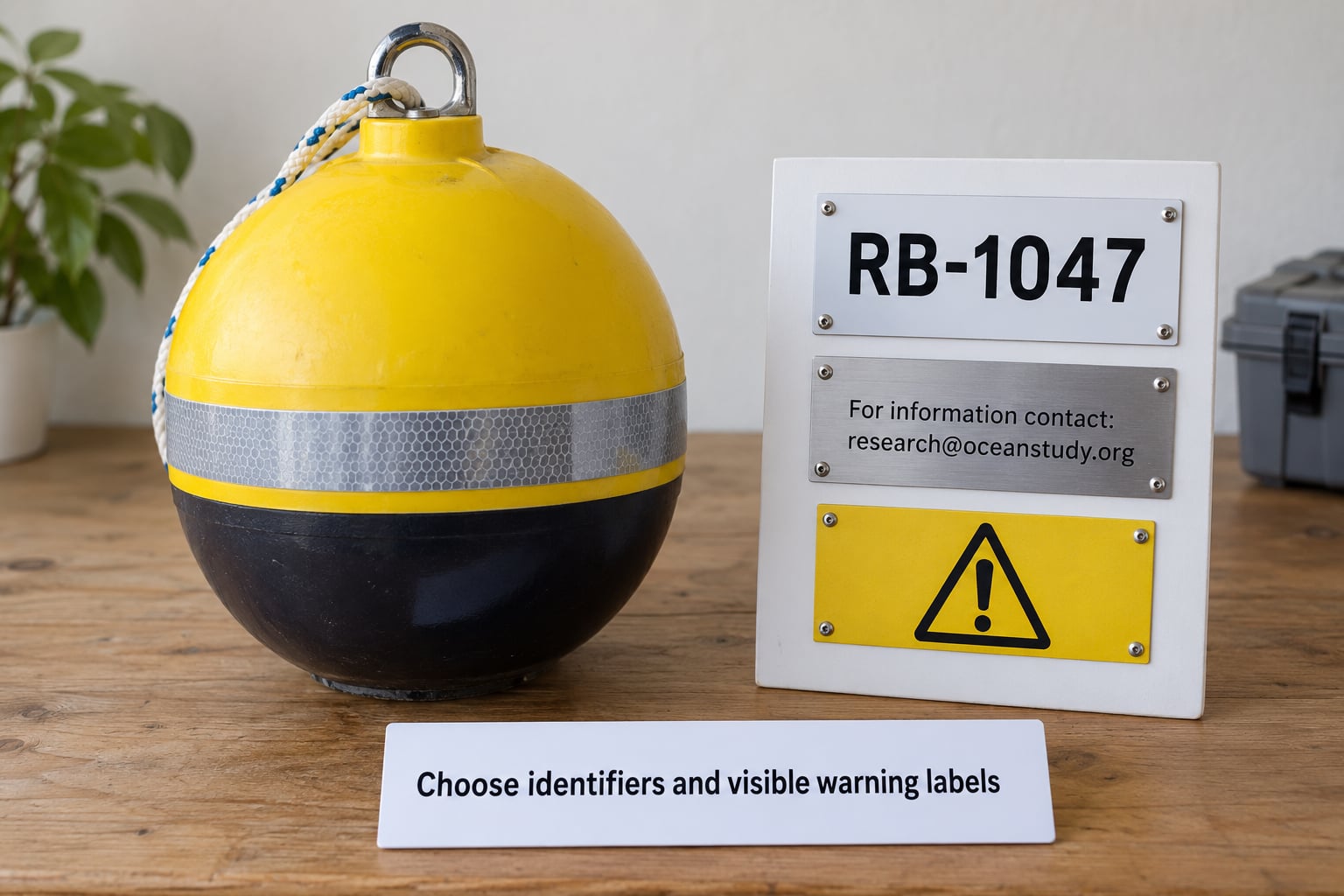
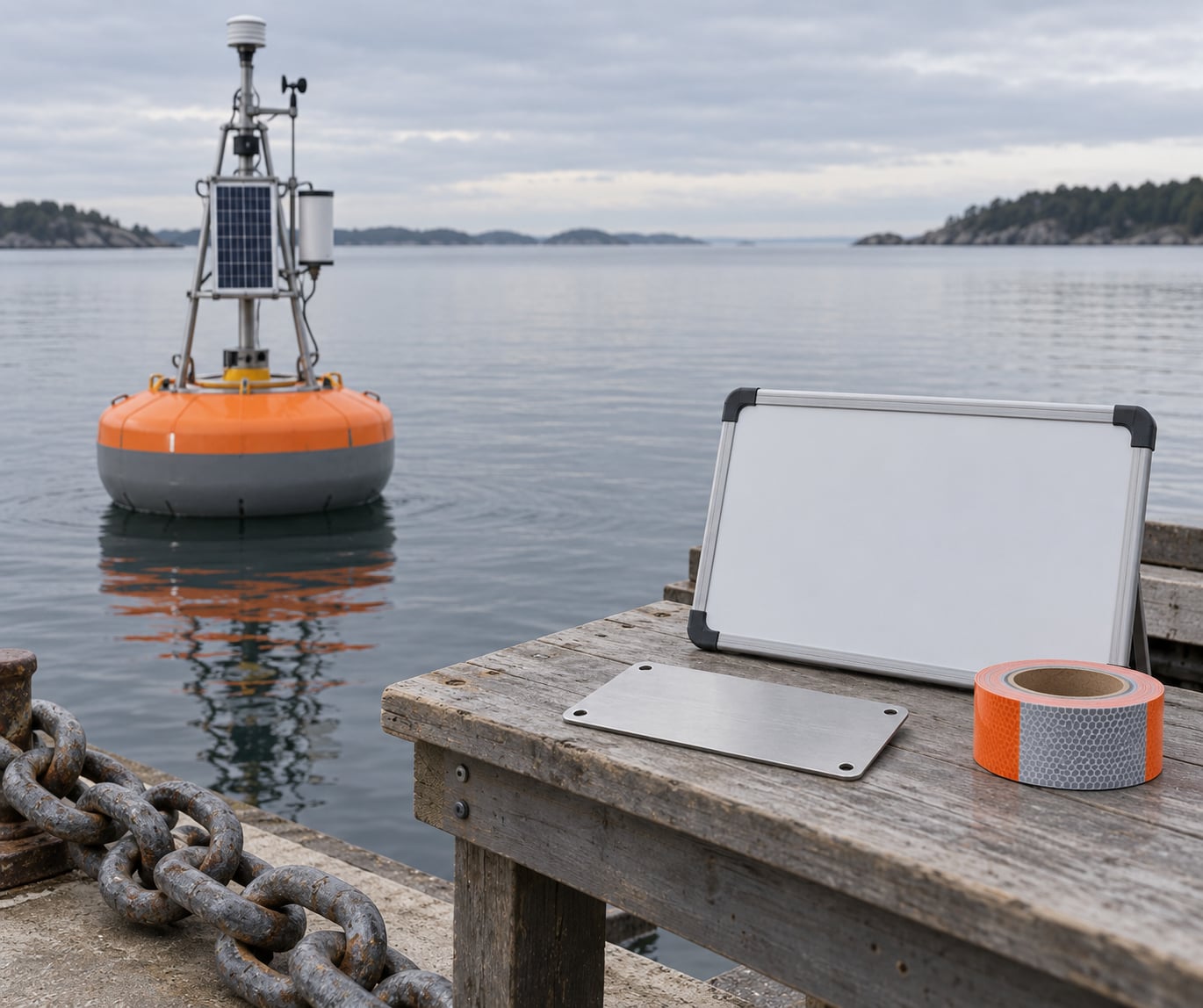
Build the label around durable, high-contrast fields: the owner’s or institution’s legal name, a unique buoy number tied to your internal inventory, a 24-hour contact route, deployment dates, and a plain caution against tampering or removal. Paint the fields on the body, the staff, or a durable plate, and keep a spare copy of the same data on file with your agency.
Watch the wording. Ad hoc terms like RESEARCH, DANGER, or NOAA do not create official status, and using an agency name on private gear can imply a government endorsement you do not have. Mimicking an official daymark or using an official identifying number is a fast way to create both legal and navigational problems.
Determine whether lights, shapes, or radar reflectors are restricted
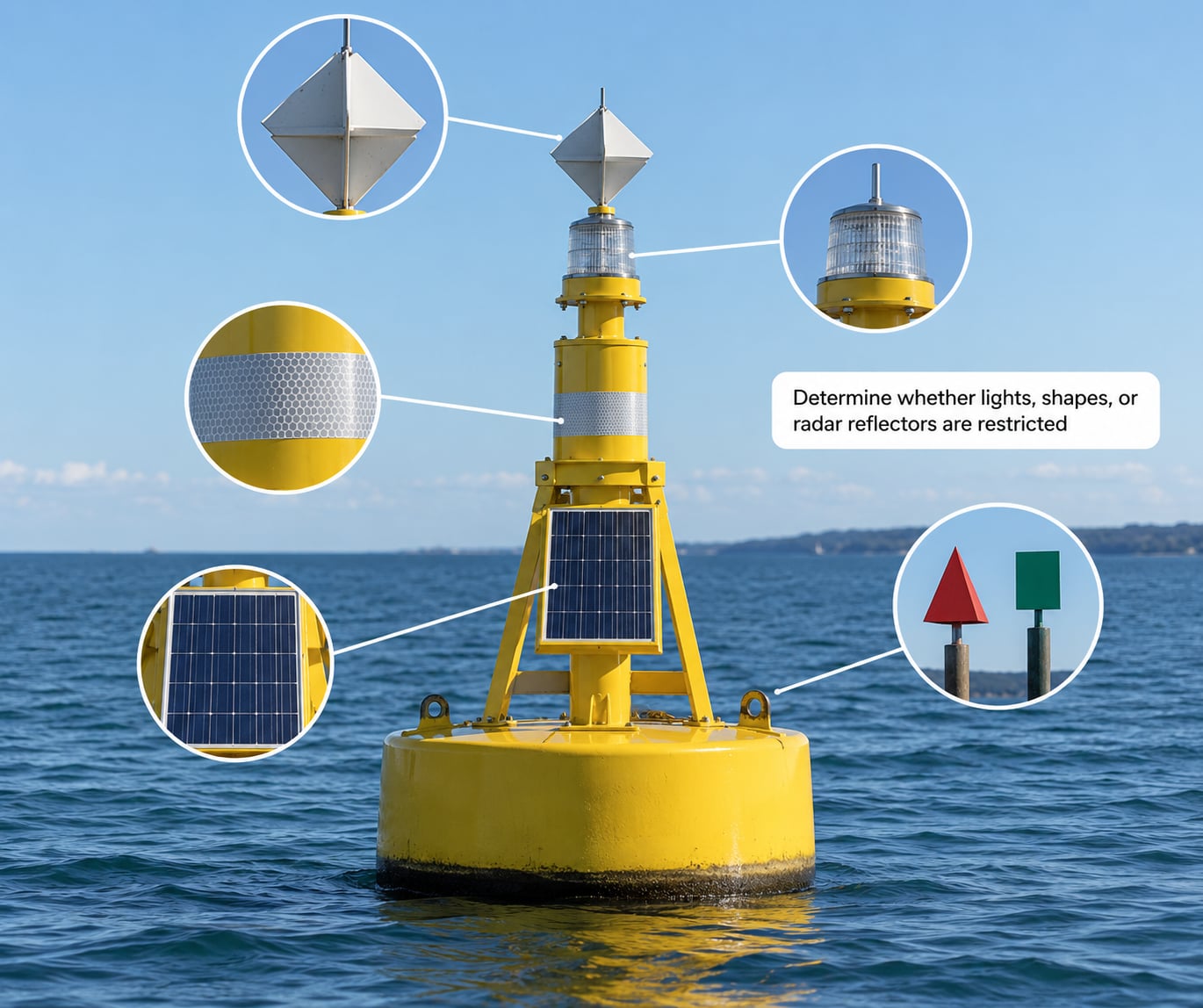
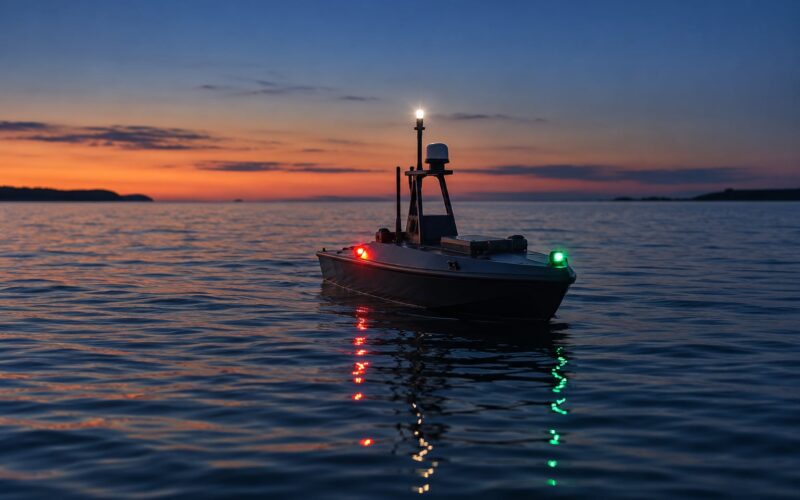
Separate passive marking from active signaling. Stickers, paint, reflective tape, flags, nameboards, and small radar reflectors are passive. Lights, flares, strobes, sound signals, and anything that changes the object’s apparent character at night are active, and active marks on private gear can require authorization.
The reason is simple: an unauthorized light or an aid-to-navigation look-alike can send a vessel toward a hazard instead of away from it. Read the controlling navigation rules and your permit conditions rather than guessing at generic requirements, and treat any light or reflector as a question for the authority, not a detail you decide in the workshop.
Get agency, landowner, and permit confirmation
Contact the right offices and keep a clean record. Depending on the site that may include the local Coast Guard district office, the state navigation authority, the harbor master or port authority, the state lands and waters division, a parks or protected-area agency, a NOAA office, and whoever manages the seabed or the land beneath it.
For each conversation, log the date, the person you spoke with, their role, the reference number issued, any conditions attached, and the deployment boundaries you agreed to. That log is worth more than the buoy.
A useful precedent sits in Alaska’s online public notices, where a wave buoy land-use permit application for Lower Cook Inlet carried the applicant’s identity, coordinates, schematic, and proposed use dates. Those fields are exactly what your label should reproduce.
Document the final design and test every mark
Produce a labeled diagram showing where each field sits on the hull, staff, or plate. Photograph all sides before deployment, record the materials and label dimensions, and check adhesion and contrast in a wet, salt-fouled condition.
Then read it at the distance you expect a vessel to see it from and confirm the owner details and warnings are still legible. If ownership is unreadable, the label is not doing its job no matter how official it looks.
Deploy, inspect, and remove the buoy legally
On deployment day, log the time, coordinates, water depth, seabed conditions, mooring details, photographs, weather, and which approvals you are operating under. Then set an inspection interval that matches your permit, and put the recovery date in the same calendar as the deployment date.
Move fast if you lose acoustic contact, the label fails, the buoy shifts off station, or anyone reports that it is misleading traffic. Correct or remove it, and document what you did.
Common Mistakes
- Borrowed authority. Putting a federal agency name or an official-sounding title on private gear. It reads as a government aid to navigation that nobody authorized.
- Random colors and lights. Bright paint and a strobe make a research float look like a hazard mark. Ask before you paint, not after.
- Label on the hull only. A surface label on a buoy whose surface body is a spare float may end up underwater. Mark the mooring, the staff, and any surface float you rely on.
- No documented owner. If the label carries only a project nickname, a recovered buoy cannot be returned or reported.
- Deploying before approval. Notification is not a permit, and a permit for one site is not a permit for another.
- Sensitive waters without permission. Protected areas, tribal waters, and sanctuary sites have their own requirements.
- Treating Coast Guard notification as the whole process. A courtesy call does not replace a state permit, an incidental take authorization, or a protected-area approval.
When to Ask for Formal Legal or Agency Guidance
Get written advice or a formal determination when the deployment is permanent, sits inside a protected area, crosses or sits within a navigation channel, uses lights or flares, creates a possible entanglement hazard, happens outside U.S. waters, or is designed so that it could pass for an official aid to navigation.
For international work, marine scientific research in the high seas runs through coastal state consent under UNCLOS Article 246, which changes who you report to entirely. A conversation with a Coast Guard district office or a local authority is coordination, not individual legal advice, and it does not substitute for counsel when the stakes are that high.
What should a research buoy label actually say?
The most reliable source is a short list pulled from the rules that actually govern your deployment. These benchmarks come from published federal and state sources that cover overlapping gear types, so use them as a floor and your permit as the ceiling.
| Label field | What to put on it | Where this comes from |
|---|---|---|
| Owner or operator | Institution or individual legal name, matching the permit applicant | USACE Nationwide Permit 10 mooring buoy terms require the owner’s name and address on the buoy |
| Permit or authorization number | Scientific permit number or research gear identification | 50 CFR 217.294 requires in-water survey gear, including buoys, to be labeled with the scientific permit number or as the LOA Holder’s research gear |
| Contact route | 24-hour monitored phone number and email | Standard owner identification practice in state marking rules |
| Deployment window | Deployment and planned recovery dates | Conditions carried through state land-use permits |
| Gear letters | Vessel or gear identifying letters at a stated minimum height | 50 CFR 50.648.264 calls for letters at least 3 inches in height painted on top of each buoy, with the permit number in numerals |
| Identification tag | Tag attached to the buoy staff with minimum dimensions | Minnesota Rules chapter 6260 sets a minimum tag size of 2-1/2 inches by five-eighths inch attached to the staff of each buoy |
| Caution line | Do not tamper, remove, or cut away; return or report if recovered | Reduces gear cutting and speeds recovery reporting |
Keep the permit record and the label identical. Agencies already collect applicant, coordinates, and dates, so a mismatch between the two is the kind of detail that turns a lost buoy into a mystery.
How to mark a buoy so it is not confused with fishing gear
Make the difference obvious rather than subtle. Commercial fishing gear carries its own identification and marking obligations, and a research float that looks like gear invites cutting. A loose-fitting mark that a vessel can retrieve on approach, combined with a clearly different color scheme from any local gear type, does more for you than a warning line alone.
Do not copy the standard patterns used for channel, hazard, or mooring marks in your area. Staying visually distinct from official marks is one of the simplest ways to stay lawful, and it takes one call to the local navigation authority to confirm what colors and shapes are in use nearby.
Label materials that survive a season at sea
Durability is a legal issue as much as an engineering one, because an unreadable label is an unmarked buoy. UV degradation, salt spray, abrasion on the waterline, and biofouling attack labels in different ways, and a six to twelve month deployment is long enough for all four.
Use marine-grade materials rated for continuous salt and sun exposure, attach plates and tags mechanically where adhesive will fail, and keep information high on the staff rather than at the splash zone. If you mark with paint, note the paint system on your design sheet so a replacement float can be relabeled identically.
What to do if gear is lost, adrift, or recovered
If a member of the public or a fisher recovers your buoy, your label is doing its job only if it tells them what to do next. Include a reporting instruction that does not depend on internet access.
On your side, report the loss to the agencies named in your permit, and check whether separate lost-gear reporting rules apply to your area and gear type.
Frequently Asked Questions
Do I need my name on a research buoy?
In practice, yes. Marking rules and permit conditions across U.S. waters consistently require the owner or operator to be identifiable on the gear, usually as a legal name or institution name plus an address or monitored contact. The U.S. Army Corps mooring buoy terms are explicit that buoys be tagged with the name and address of the owner. Your own permit may name the applicant and expect that same identity on the mark.
What should a research buoy label say?
At minimum: owner or institution name, a unique buoy number, a 24-hour contact route, the permit or authorization number, and the deployment window. Some rules add gear letters at a minimum height or a tag with minimum dimensions attached to the buoy staff. 50 CFR 217.294 requires in-water survey gear to be labeled with the scientific permit number or identified as the holder’s research gear.
Can a research buoy have a light or flashing beacon?
Ask first. Lights, flares, and strobes change how a float reads at night, and private gear that imitates an aid to navigation can create real navigational risk. Some authorities will authorize an active mark under a permit condition or a written agreement; others will not allow one at all. Reflective tape and small radar reflectors are passive and usually easier to approve, though you should still confirm with the controlling navigation authority before installing anything.
Do I need permission to deploy a buoy in U.S. waters?
Usually yes, and which permission depends on the water and the gear. State-managed waters, the territorial sea, and the exclusive economic zone are administered differently, and state land-use permits, federal authorizations, and protected-area approvals are separate requirements. Moored structures also tend to trigger navigation-safety review. Start with the state agency for the site and the Coast Guard district office for navigation questions, then work outward from there.
Are research buoys subject to COLREGs?
COLREGs govern the conduct and equipment of vessels, not buoys directly. What matters for your float is that it must not be mistaken for an official aid to navigation and must not obstruct or endanger navigation, which is exactly why vessel strike avoidance, clearance zones, and vessel speed measures appear in survey permits. Where marine mammals are involved, the Marine Mammal Protection Act and Endangered Species Act conditions can add gear marking and clearance requirements on top of COLREG practice.
What happens if a research buoy breaks loose?
Treat it as a reportable event. Check your permit for reporting obligations, notify the agencies named in it, and warn the local navigation authority so vessels are warned about an adrift object in a traffic lane. If gear is recovered by someone else, your label should tell them not to cut it away and who to call. Document the drift track, recovery, or loss in your deployment file, because that record is often what closes out an incidental take authorization or permit condition.
Conclusion
Start by identifying the exact deployment waters and asking the controlling authority how your buoy will be classified before you order labels or install lights. That one conversation decides which rules apply and saves a redesign later.
Then keep one continuous record for the whole deployment: approval, label design, deployment log, inspections, and removal. If a buoy is unlabeled, unauthorized, or mistaken for something it is not, the paperwork is what sorts it out. This guide reflects general U.S. practice as of 2026 and is not legal advice; verify the current rule text and your permit conditions before you deploy.