A float plan is a written record of your boat, your route, and your expected return time, left with a reliable person on shore so search and rescue can start in the right place if you miss your check-in. The same document gets called a trip plan, a sail plan, or a rescue plan depending on who hands it to you.
Here is how to write a float plan that a stranger can act on at 3 a.m.: gather the vessel, route, people, contact and timing details before you leave, set an overdue trigger, hand the plan to someone who will actually pick up the phone, and close it out when you are back. Twenty minutes at the dock is the whole job.
The payoff is straightforward. Without a plan, rescuers start with nothing but a last known position and a guess about where you went. With one, they know the vessel they are looking for, the water you were in, and the hour you were last heard from, which turns a wide-open search into a short sweep.
That matters just as much on a lake as it does offshore. The plan scales down to a kayak, a personal watercraft or a solo skiff without losing any of its useful fields.
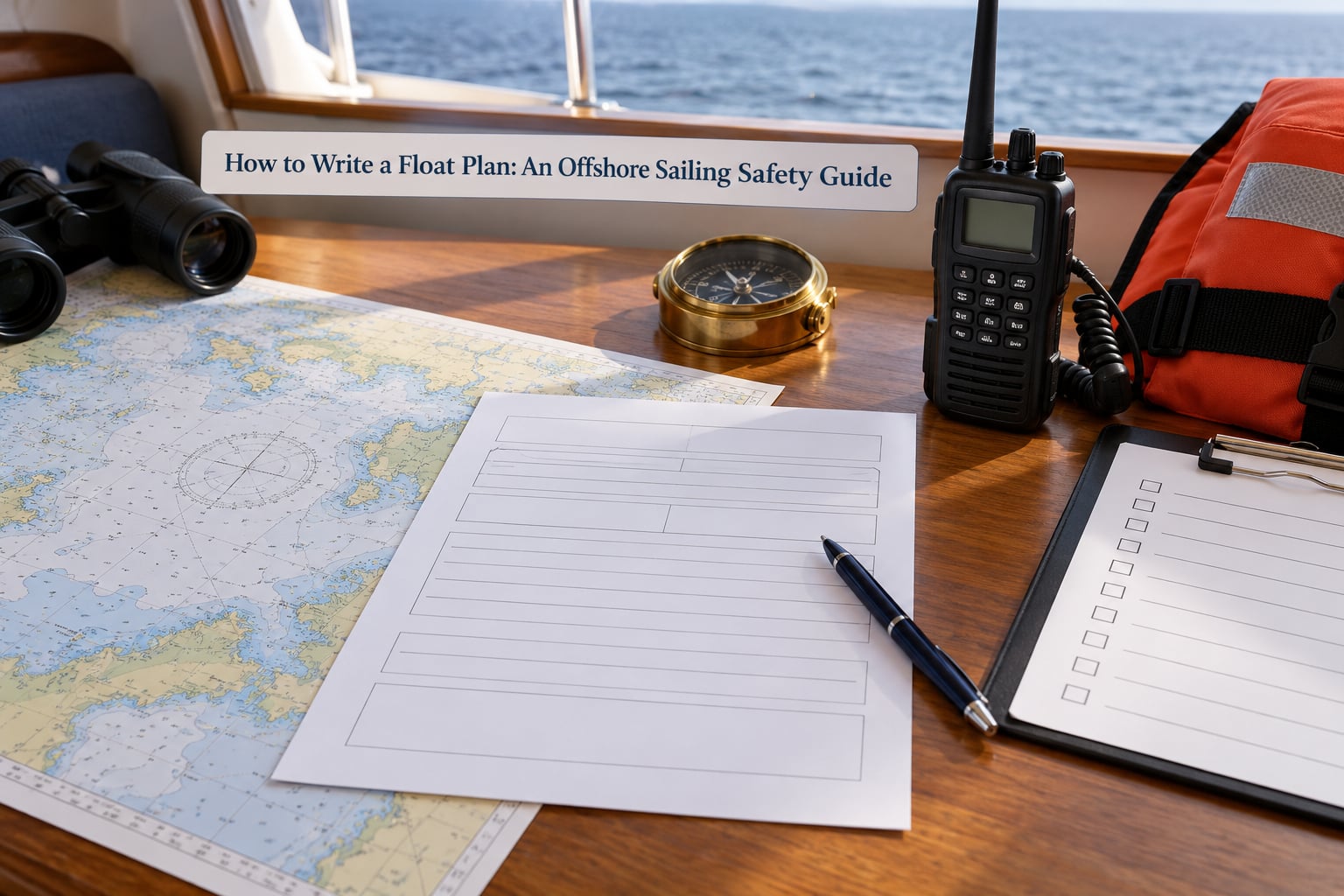
Table of Contents
- What You Need Before You Write a Float Plan
- Step-by-Step: How to Write a Float Plan
- 1. Define the voyage and its purpose
- 2. Build a realistic route and schedule
- 3. Record the people and systems aboard
- 4. Gather emergency and communications details
- 5. Set departure, overdue, and rescue triggers
- 6. Complete the risk and contingency information
- 7. Review, file, share, and update the float plan
- Common Float Plan Mistakes to Avoid
- Frequently Asked Questions
What You Need Before You Write a Float Plan
You need eight groups of information before the plan is worth writing down. Gather them first and the writing itself takes one focused sitting.
- Vessel description. Boat name, type, length overall, hull and cabin colour, registration number, and any distinguishing feature such as a hardtop, outriggers, a bimini, or a single large antenna.
- Engine and propulsion. Single or twin engines, horsepower, and whether the boat sails, motors, or both. A sailboat needs its rig and sail colour described separately.
- Home base. The marina, ramp or storage yard you launch from, and the slip number or trailer location if the boat lives on a trailer.
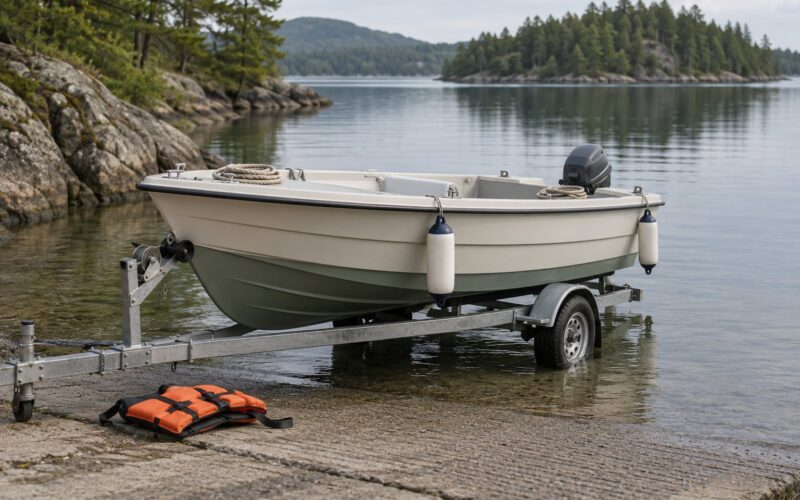
- Tow vehicle. Make, model and colour of the truck that tows it, plus the trailer description. A boat on a trailer is far easier to identify from a road or ramp.
- People aboard. Full name, address and phone number for every single person on board, plus their experience level.
- Trip itinerary. Departure point, destination, planned route or waypoints, planned stops, and the reason for the trip.
- Times. Departure time, planned return time, and the latest acceptable return time before someone ashore should start asking questions.
- Communications. Which VHF channels you monitor, whether you carry a satellite messenger, and whether an EPIRB or personal locator beacon is aboard and registered.
Add a photo of the boat if you can. A single image with the vessel and the tow vehicle in the same frame does more for identification than another sentence of description.
Write the vessel description as though the reader has never seen a boat. “24-foot white and blue centre console, outboard engine, rod holders on the hardtop” lets a pilot flying over recognise it. “Our boat” does not.
For a short outing on a local lake, most of that collapses into a single line. A kayak plan can be one sentence: blue hull, paddle, PFD, launching from the north ramp, back by 11:00, and the name and number of the person on the beach. Scale the detail down, never the intent.
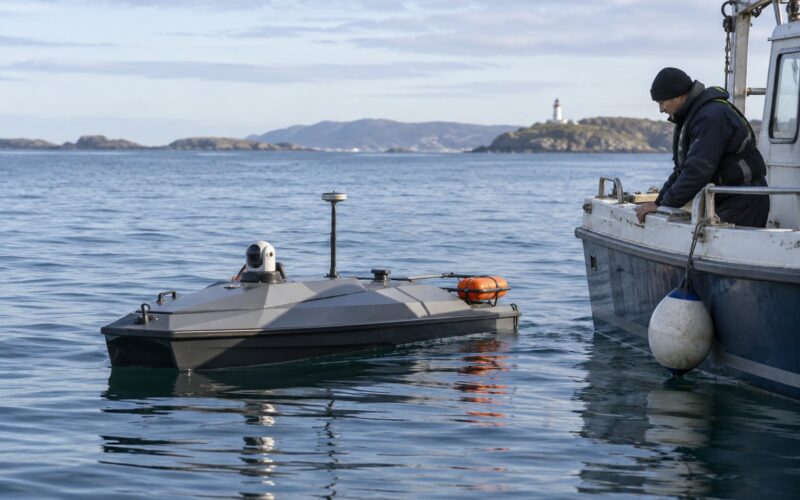
If you operate an uncrewed surface vessel or an ocean-going robot with a shore station, the plan gets two extra fields: the expected reporting interval and the maximum length of time the platform may go silent before the operator treats it as a fault. A human crew has someone who notices the radio is quiet. An autonomous system does not, so that threshold has to be written down before departure.
Two more things worth adding: a medical note, either allergies, medications or conditions a responder should know, and the location of the nearest diversion harbour on each leg of the route.
Step-by-Step: How to Write a Float Plan
1. Define the voyage and its purpose
Open with one line that states what the voyage is and what it is for. Name the vessel or platform, who operates it, the objective, the port you leave from, the destination, and the total time you expect to be away including contingency.
Done when: someone who has never met you could repeat the trip back to you correctly after reading that one line.
2. Build a realistic route and schedule
Write the planned route with enough precision that it is searchable, not just decorative. List waypoints or landmarks in order, the departure window, the expected return window, planned stops with arrival and departure times, and at least one alternate harbour you can actually reach on a bad-weather day.
Mark the areas you intend to avoid, such as shipping lanes, shoal ground, or a stretch of coast with a known tide race. Then add margin to the schedule. A plan that shows a nine-hour day on an eight-hour forecast has no margin at all.
Done when: the route has named waypoints, real clock times, and one fallback destination, and the total hours add up with slack included.
3. Record the people and systems aboard
List every person aboard with their full name, mobile number, and relevant experience. Nobody sails well in a squall just because they own the boat, so note who has actually been offshore before.
Then assign roles for the trip: who navigates, who keeps watch, who handles communications, and who makes the call to shelter. If the vessel is uncrewed or remotely supervised, replace the crew list with the shore operator names, the watch schedule, the telemetry you expect, and the safe limits you have set for wind, sea state and battery state.
Done when: each person or shore station has a named role, and nobody aboard is doing four jobs at once.
4. Gather emergency and communications details
Write down the numbers a stranger might need. That means the emergency services number for the country you are in, the coast guard or maritime rescue coordination centre covering the area, and the radio channel they monitor, which is channel 16 for the US coast guard.
Add the marina or harbour office number, an alternate marina, and a technical support contact for the boat or its electronics. Name a second person ashore who can act if the primary contact cannot be reached, plus a way to reach them.
Done when: every number has been dialled or tested, and no entry says simply “the harbour” without a name.
5. Set departure, overdue, and rescue triggers
This is the part most plans leave vague, and it is the part that decides whether a delay becomes a rescue call. Write down the actual departure time, the actual expected return time, and then the overdue trigger: the specific clock time at which the shore contact should start calling you, followed by a second time at which they should contact authorities.
Give those lateness thresholds a number. A contact who is told “call me if I’m late” will call at noon for a boat due back Friday. A contact told “if there is no answer at 18:00, call again at 19:00 and notify the coast guard at 20:00” knows exactly what to do at 18:05.
Also write the conditions that change the plan: a wind or sea state above your limit, a fuel figure, a dead instrument, or a radio failure. Each one gets an action attached.
Done when: the plan contains two clock times for escalation, not one, and a failure response for each critical system.
6. Complete the risk and contingency information
List the hazards specific to this voyage rather than generic warnings. Name the shoals you will pass close to, the traffic you expect to meet, the current that runs hardest at the wrong hour, and the stretch where cell coverage drops out.
Cover medical considerations, the count and type of personal flotation devices aboard, life-saving equipment including the raft and its service date, and any other gear that affects survival time. Then describe the likely failure modes and what you will do about each one, plus the alternate route and the shelter options.
Done when: a reader can tell which three things are most likely to ruin this trip and what you planned to do about them.
7. Review, file, share, and update the float plan
Read the plan back against reality before you cast off. Check that the registration number matches the boat in front of you, that the passenger list matches who is actually aboard, and that the return time still makes sense given the weather.
Then hand it over in person where you can, and brief the contact. Explain what the boat looks like, where you are going, and exactly what they should do at the first and second overdue times. Write the plan down for them if they are not a boater, because they will be relaying the details to a dispatcher under stress.
Test the method you chose to send it. A text message that arrived, an email sitting in an inbox, a shared position link you opened on your own phone. A filing method you never tested is not a filing method.
Paper works fine when your contact is on the dock. Email and text work when they are not, because you can change the plan from the water. For an offshore passage, a satellite messenger or a shared position link beats both, since it keeps sending coordinates when a cell network does not reach you. Pick the format that matches your actual communications gear, and write the choice into the plan so nobody assumes.
For extended voyages, decide now whether the plan travels as a single sheet or as a short written briefing with the chart attached. A sheet alone goes missing in a jacket pocket; a briefing gets remembered.
Update the plan whenever the voyage changes: a new route, a different anchorage, an added passenger, a delayed return. And when you get back, tell the contact you are safe.
Done when: the contact has acknowledged the plan, the overdue times have been read back to you, and you have a way to close it before you leave.
Common Float Plan Mistakes to Avoid
The route is described in general terms. “Heading out toward the islands” tells a search team nothing. Write named waypoints, a course, or a set of coordinates they can put on a chart.
The schedule has no slack. Real voyages run late. Build margin into the return time so an ordinary delay does not trigger a call to the authorities.
The overdue trigger is a feeling, not a time. If it does not contain a clock time, your contact will guess. Guesses produce early panic calls and, far worse, no call at all.
The plan is left with someone unreliable or uninformed. It needs a person who answers their phone, understands that you are on the water, and can relay the vessel description without guessing.
Hazards are missing. A plan with no mention of the tide, the traffic, or the cell coverage gap is only half a plan.
There is no backup shore contact. If your one contact is asleep, unreachable, or on a flight, the plan stops working at the worst moment.
The plan goes stale. You sold the boat, changed the canvas, added a radar arch, or rerouted. The description on file now points to a vessel that does not exist.
You forget to close it. Unclosed plans trigger real search and rescue activations, and they cost the responsible person a phone call they will not forget. Close the plan the same day you get back.
You file it with the US Coast Guard. This one comes up constantly in forums and it is wrong. The Coast Guard does not accept or store float plans filed in advance, and there is no benefit to mailing one in. Your plan belongs with a person ashore, who is the one who calls authorities if you go missing. Anglers on the West Coast paddling forums have confirmed the same thing from the water side: nobody wants your paperwork before they need it.
Frequently Asked Questions
Who needs to file a float plan?
Every boater, on every outing. The skipper normally writes it, though any crew member can be given the job, and for a kayak, a personal watercraft or a small skiff the plan gets shorter, not optional. It matters most when you are alone, on remote water, out past cell coverage, or away for more than a day. For an uncrewed or remotely supervised vessel, the shore operator writes it and keeps the same fields current.
What should I bring back when closing a float plan?
Bring back the plan itself, plus anything the shore contact added while you were gone, such as times they called you or times they considered calling. Tell them you are back and when you arrived. Closing the plan is what stops an unnecessary search and rescue activation, and it is the step people skip most often. Make it a habit the same day you dock.
How often should a float plan be updated?
Rewrite it whenever the voyage changes rather than on a fixed schedule: a new route, a different anchorage, an added passenger, a swapped boat, or a delayed return. Then update it during the trip every time the itinerary or the schedule moves, and always after a gear failure changes what you can do. A plan written three days ago for yesterday’s route is worse than no plan, because it looks authoritative and is wrong.
Does an autonomous sailing robot need a float plan?
Yes, and the fields change slightly. Instead of a crew list you record the operator, the shore station, the telemetry you expect to receive, the reporting interval, and the maximum silence before the platform is declared a fault. Add the safe limits you set for wind, sea state and battery, the last known position, and the person ashore who has authority to call search and rescue.
What should I do when a float plan becomes overdue?
The shore contact tries the listed methods first: call the mobile, then the satellite messenger, then the alternate contact. If there is still no answer at the second overdue time written in the plan, they notify the coast guard or the maritime rescue coordination centre and give them the vessel description, the route, the last known position and the overdue time. Do not delay this hoping for a call that may never come.
Start with the four fields that carry the most weight: who is aboard, what the boat looks like, where you are going, and the two times after which someone should act. Fill in the rest at the dock, hand it to a person who answers their phone, and close it the day you get back.