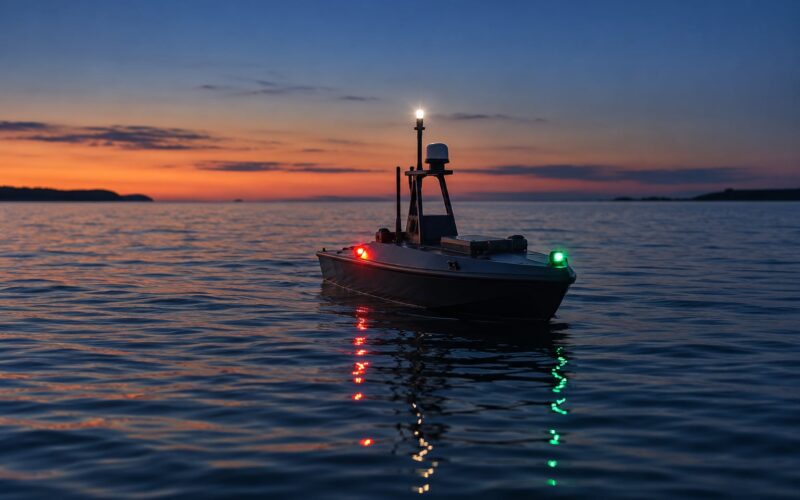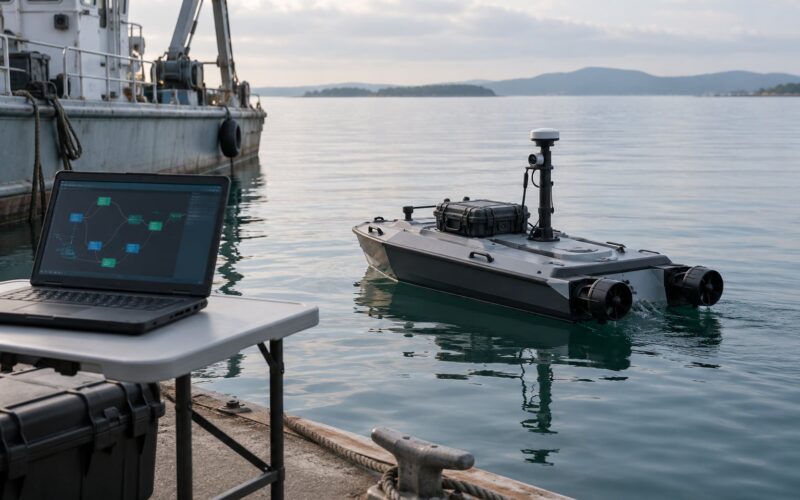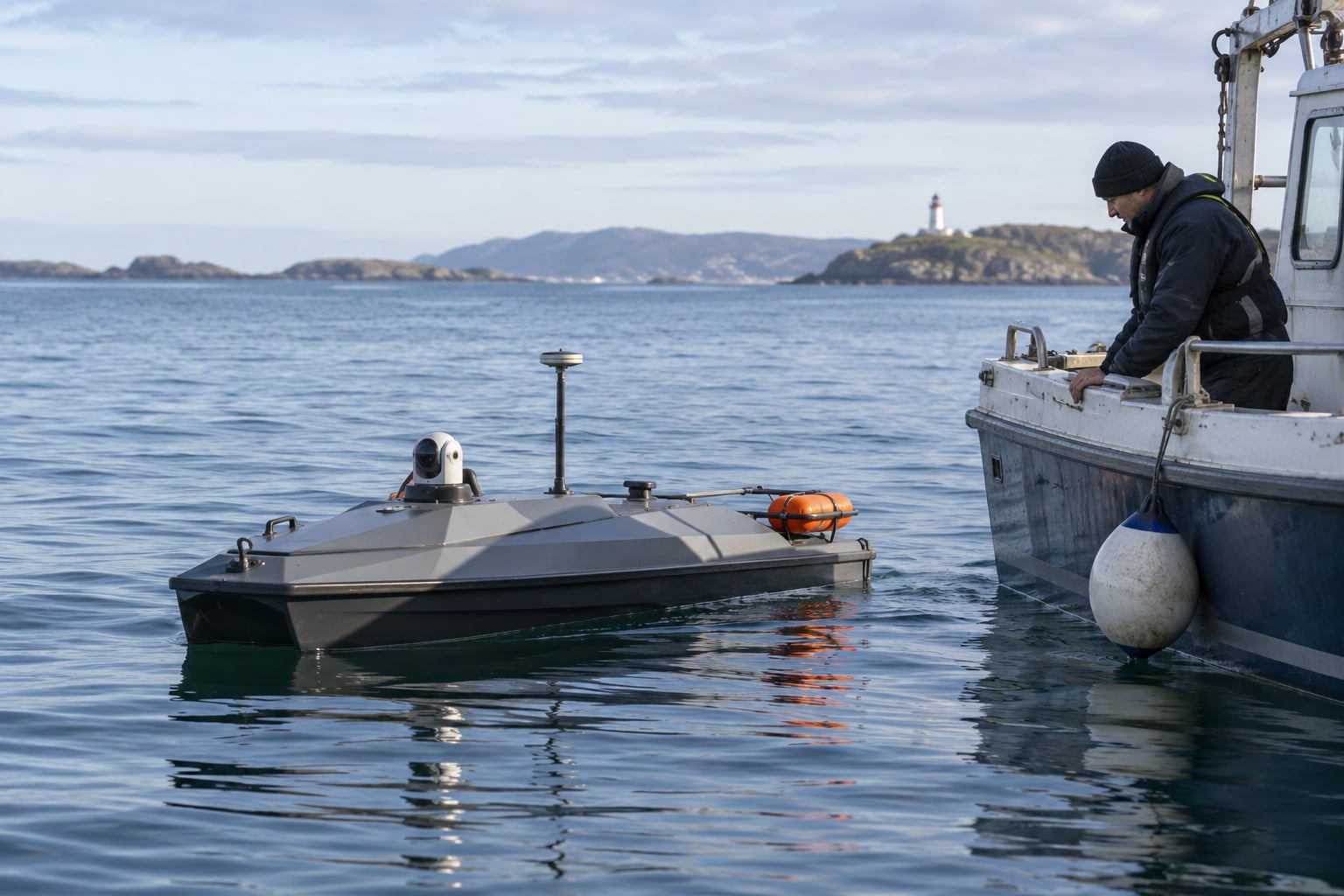
Short answer: sometimes, and there is no single rule that covers it. A small uncrewed surface vessel operating quietly in open water may need nothing more than state registration, while the same boat inside a port district, a marine sanctuary, or near protected species usually triggers written permission from an agency or land manager. Requirements follow the waterway, the mission, and the payload, not the hull size alone.
The reason so many people get this wrong is that “drone boat” is used for two completely different things. A drone boat can mean an aerial drone launched from a manned vessel, or it can mean an unmanned surface vessel (USV) that floats on the water with nobody aboard steering it. Those two things fall under different regulators and different rulebooks.
This guide walks through who has authority over what, which scenarios trigger paperwork, and how researchers and open-hardware builders actually get a deployment authorized. It is written for the United States first, with a short section on operating elsewhere. Rules change, so treat this as a map of where to ask, not a substitute for the answer from the agency that controls your launch site.
Table of Contents
- Do You Need a Permit to Operate a Drone Boat?
- What Determines Whether a Permit Is Required?
- U.S. Rules for Unmanned Surface Vessels
- When You Need a Permit to Operate a Drone Boat
- Do You Need a Permit for a Small Autonomous Sailboat?
- What Permissions Apply in Other Countries?
- How to Check the Rules Before Launch
- Safety and Operational Requirements
- Frequently Asked Questions
- Do all drone boats need a permit?
- Does the FAA regulate a boat operated on the water?
- Do I need a permit for a small autonomous sailing robot?
- Can I operate a drone boat in a national park or marine sanctuary?
- Do I need a permit to carry ocean sensors on an unmanned boat?
- What documents should I have before launching a drone boat?
- What to Do First
Do You Need a Permit to Operate a Drone Boat?
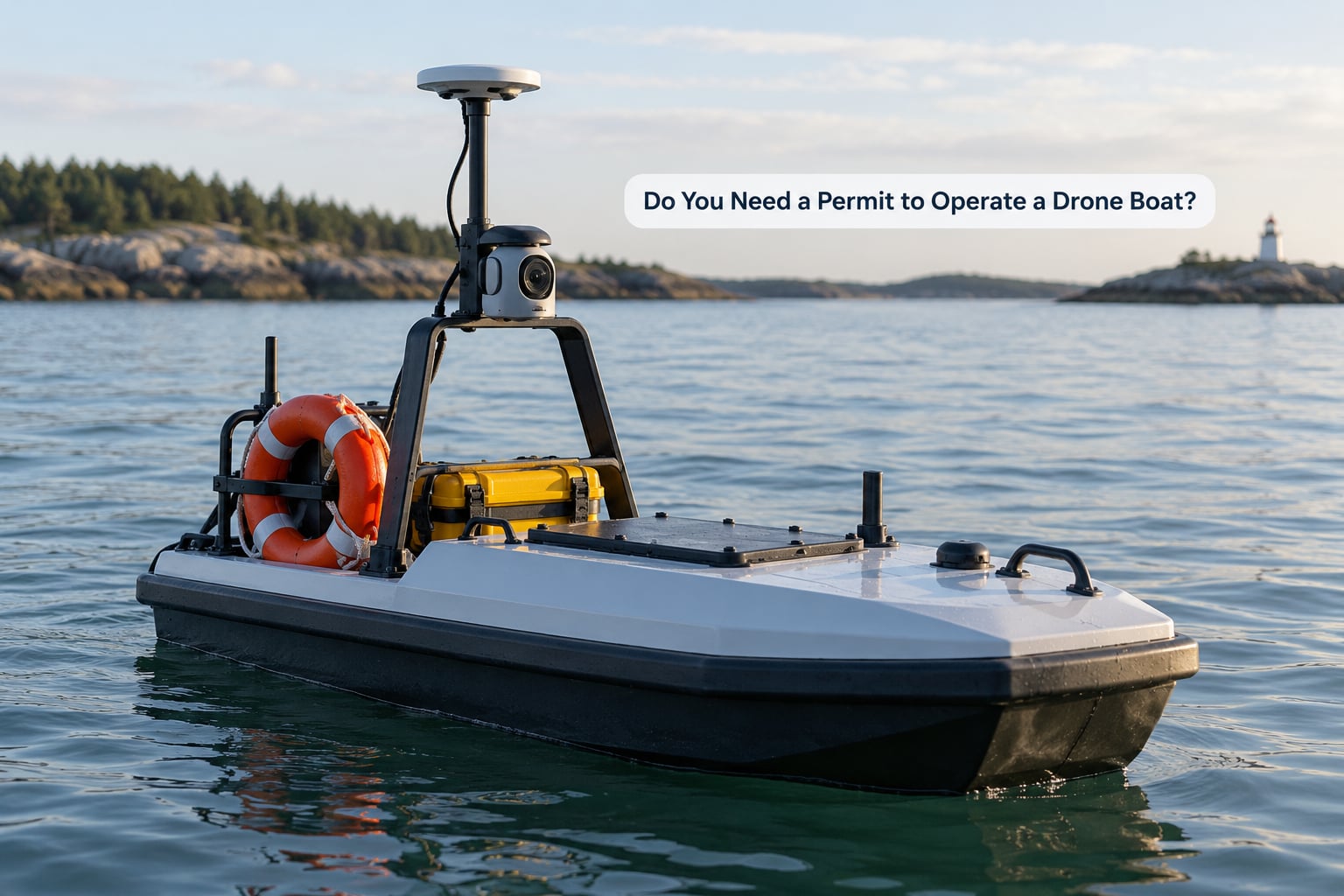
You need permission when one of three things is true: the boat operates on water somebody else regulates, it does something that affects protected resources or other vessels, or it is being run as part of a research or commercial mission rather than casual recreation. Each of those routes to a different agency and a different document.
Start by sorting out what you actually have. Many people searching this question want permission to fly a camera drone off the deck of their own boat. That is an FAA question, and the rule is unusually specific: under 14 CFR Part 107 you may operate from a water-borne vehicle only in a sparsely populated area, and you need a waiver to do it near people on shore. Nothing in that rule applies to a boat that floats on its own.
A USV with no one aboard is a vessel, so it is treated like a vessel. Navigation rules, lights and sound signals, right-of-way, and manning or remote-watchkeeping expectations all come from maritime authorities rather than aviation ones.
| What you are doing | Who regulates it | Typical paperwork |
|---|---|---|
| Launching an aerial drone from a moving boat | Federal Aviation Administration | Remote pilot certificate, aircraft registration, waiver if near people |
| Launching an aerial drone from a stationary boat or dock | FAA plus state and local authority | Same as above, plus state registration and local launch rules |
| Operating an unmanned surface vessel in inland waters | State boating agency, sometimes EPA or Army Corps of Engineers | State vessel registration, water quality permit, or permit to work in a protected area |
| Operating a USV on navigable waters | U.S. Coast Guard, plus the Army Corps of Engineers for structures | Documentation or a status determination, special use authorization, COLREGs compliance |
| Operating inside a port district | Port authority or harbor master | Prior written permission, usually requested days ahead |
That port row catches people out constantly. Port tariffs can require prior written permission for any unmanned equipment launched into port waters, even for a small research float, and the tariff typically states that federal permits remain the operator’s own responsibility. You cannot use the port’s approval as a substitute for anything else, and it does not shield you from it either.
What Determines Whether a Permit Is Required?
Six variables decide it. Walk them in order and you usually know which agency to call before you launch anything.
1. How autonomous is the boat?
A vessel that a person steers by radio link, and a vessel that plans its own route and only calls in when something goes wrong, are treated very differently. Higher levels of autonomy draw more scrutiny because the risk picture changes when nobody is looking at the water in real time.
2. What is in the hull?
A float with a camera and a GPS puck is a different regulatory object from a hull carrying fuel, lithium batteries beyond a threshold, scientific sensors, or anything that could injure someone. Cargo that changes the risk profile changes the paperwork.
3. Where is the operating area?
This is the biggest factor. Inland lake, river, port district, marine sanctuary, and open ocean each have a different authority and a different set of rules. The same boat can need nothing on one Tuesday and a permit application on the next.
4. Who manages the land you launch from?
Public beaches, park property, federal lands, university waterfronts, and private marinas all have their own rules about launching. Launching from the water rather than the beach does not reliably dodge a land manager’s regulation, and park staff have been explicit about that.
5. Who does the work benefit?
Recreational use, funded research, and commercial deployment are treated as three different categories. Federal research clearances exist for the middle one, and commercial operators carry the weight of the third.
6. Which country, state, or local body has authority?
Rules change at state lines and even within a single harbor. Your answer is jurisdiction-specific, so a generic answer from a forum rarely transfers to your waterway.
U.S. Rules for Unmanned Surface Vessels
The federal framework is split across agencies that rarely overlap. Knowing which one owns your operation saves weeks of emailing the wrong office.
The FAA regulates aircraft, not boats on the water. A USV that never leaves the surface does not need an aircraft registration, a remote pilot certificate, or a waiver under Part 107. The moment you put an aircraft in the picture, all of that returns, including the rule about launching from a moving water-borne vehicle.
The Coast Guard is the maritime regulator for navigable waters. It cares about collision risk, right-of-way, distress response, and communications with other vessels. Unmanned craft that lose control, drift into a channel, or fail to respond create real search-and-rescue load, and enforcement language has been extended explicitly to cover unmanned maritime systems.
The Army Corps of Engineers and the EPA come into play on inland waters. The Corps has jurisdiction over navigable waterways and structures, and the EPA’s National Pollutant Discharge Elimination Act framework covers discharges into waters of the United States, which can reach research vessels taking water samples.
NOAA runs the marine sanctuaries, which have their own permit process and their own prohibitions on anchoring, deploying equipment, and touching habitat.
| Waterway type | Lead authority | What usually triggers permission |
|---|---|---|
| Inland lake or river | State boating agency | State vessel registration, boating license, special local rules |
| Inland waters with discharge or fill | State environmental agency, EPA | Water quality permit for sampling or discharge |
| Navigable waters | U.S. Coast Guard | Vessel documentation or status determination, safety authorization for the mission |
| Port district and harbor | Port authority, harbor master | Prior written permission for any deployment or trial run |
| National marine sanctuary | NOAA | Sanctuary permit for research, sampling, or equipment deployment |
| Federal property shoreline | U.S. Army Corps of Engineers, site manager | Real estate or waters permit for launching and mooring |
| State park or beach | State parks, local authority | Written approval for launching, landing, or operating over park property |
| International waters | Flag state, port state, coastal state | Varies by treaty and coastal state; check before transit |
One thing to keep an eye on: the Coast Guard Authorization Act of 2018 created a new framework in 46 USC chapter 700 for unmanned maritime vessels, and the implementing rules have been under active development since. The direction of travel is toward more formal authorization for anything operating beyond visual line of sight. If your project has a multi-year timeline, build compliance for that framework into your plan rather than assuming the current patchwork holds.
When You Need a Permit to Operate a Drone Boat
Low-risk recreational use on a small inland lake is the case where the answer is most often a straightforward no. Everything above that line has a decent chance of needing something in writing.
Deployments inside ports and constrained waterways come first. Harbors, channels, and terminals are where an unmanned boat is most likely to be a problem for someone, and harbor masters and port directors generally want notice before an untested craft enters their water.
Operations near dams, bridges, Coast Guard facilities, ferry routes, and heavily used beaches also draw review. So does launching from federal property, which is why university field programs frequently discover the permit requirement at the paperwork stage rather than at the launch ramp.
Research and monitoring missions carry their own layer. Work involving marine mammals, protected species, or habitat disturbance needs separate authorization on top of any vessel paperwork. Environmental sampling can trigger a discharge permit, and deploying anything long-term on the seafloor may need approval from more than one agency at once.
Towing, pushing, or carrying a payload that can reach into the water moves you closer to regulated vessel operations. So does any mission that depends on a control link beyond visual line of sight, because that is the point where authorities stop thinking of the boat as a model and start thinking of it as traffic.
Extended autonomous operation without a human able to intervene quickly is the other one. Short supervised test runs and long unsupervised deployments are not the same activity in most frameworks, and the paperwork gap between them is wide.
Do You Need a Permit for a Small Autonomous Sailboat?
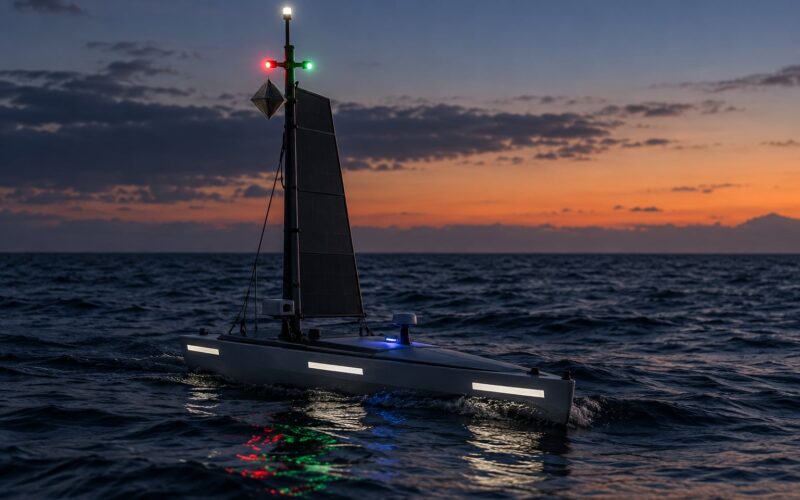
Often no, and size helps you here. A small autonomous sailboat operating on a lake or nearshore, well clear of commercial traffic, carrying a GPS and a light, and monitored by someone onshore is the classic case where registration and common-sense navigation compliance are enough.
Small does not mean exempt, though. The factors that pull a permit back in are the same ones listed earlier, and a hull size does not cancel any of them. A two-metre autonomous boat inside a port district still needs the port’s permission. One launched from a state park beach still faces the park’s rule. One sailing across a shipping lane still owes other vessels the lights and sound signals that make it visible.
For open-source sailing robots specifically, check four things before launch: whether you can keep the vessel in sight or on a reliable link, whether it has a collision-avoidance path that fails safe, whether it displays the lights a sailboat of its size would show, and what you do when the wind puts it somewhere you did not plan. That last question is the one authorities ask about, and the honest answer about it is worth more than a clever workaround.
What Permissions Apply in Other Countries?
Outside the United States, there is no universal rule, and anyone who tells you there is one is wrong. The International Maritime Organization has been working toward a regulatory roadmap for Maritime Autonomous Surface Ships, but the detail lands with flag states and port states through their own domestic rules.
The pattern is still familiar. Maritime authorities handle the vessel, aviation authorities handle any aircraft that launches or lands, port authorities control harbor waters, and environmental agencies control what you can put in the water and what you can disturb. Research permits usually come from the science or environment ministry rather than from a general regulator.
Two things travel well across borders. Transit through a foreign port will usually trigger inspection requirements regardless of where the boat was built, and entering another state’s territorial waters carries that state’s rules with it. Check the coastal state for every country on the route, not just the departure country.
Do this before you load the boat on a trailer: identify the authority for each territorial sea you will cross, and confirm in writing what each one requires for an unattended surface craft.
How to Check the Rules Before Launch
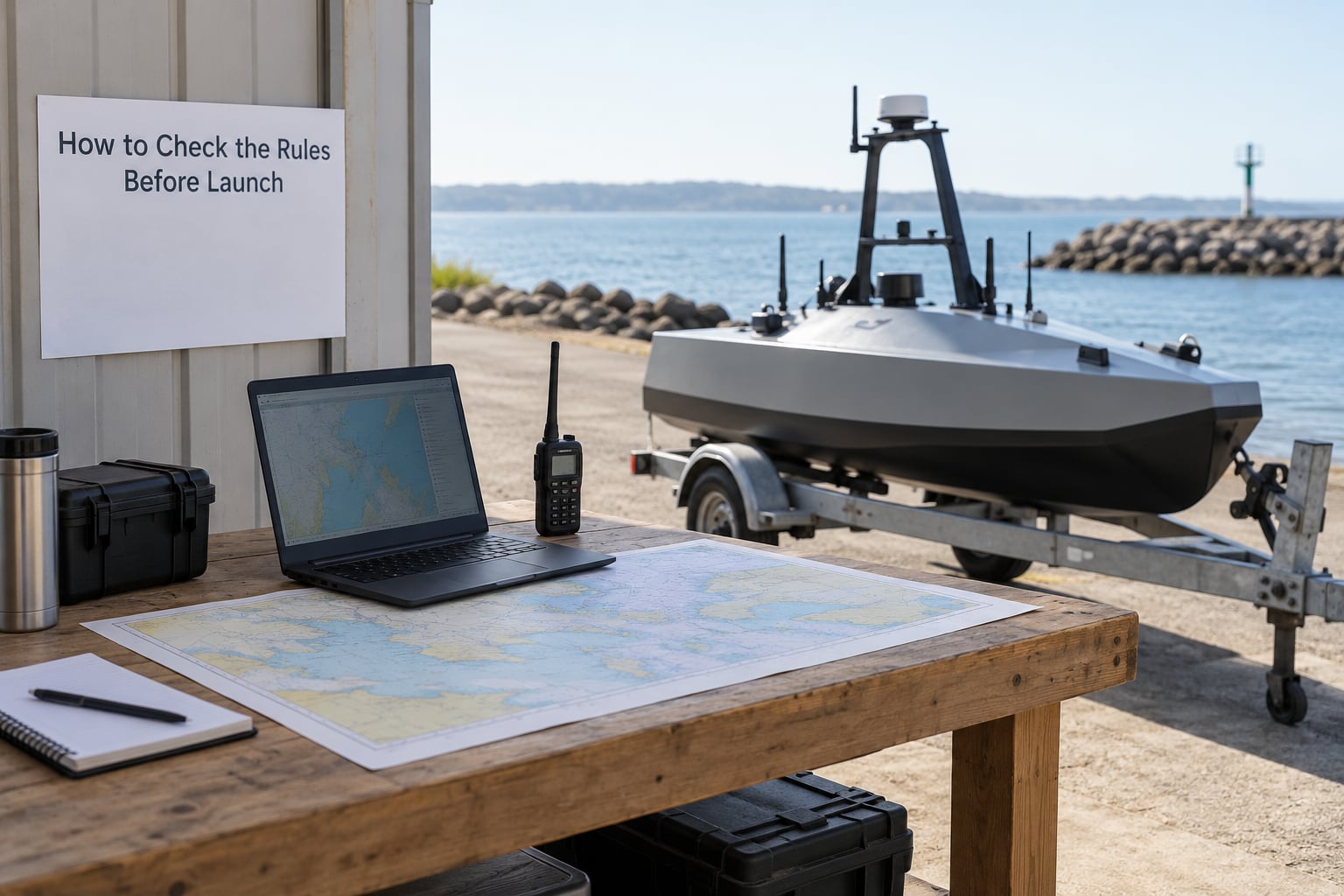
Six steps, in order. Skipping the first two is how people end up having a good deployment stopped halfway through.
- Pin down the jurisdiction. Mark the exact operating area, not the launch point. Then find out whether it is inland waters, navigable waters, a port district, a sanctuary, or state park land. That answer names the authority.
- Classify the vessel and the mission. Write down the autonomy level, what is on board, who is monitoring, whether anyone could be aboard in an emergency, and whether this is recreation, research, or commercial work.
- Contact the authority early. The Coast Guard marine safety center for navigable waters, the state boating agency for inland waters, the port authority or harbor master for harbors, NOAA for sanctuaries. Ask a specific question about a specific area and dates.
- Document the operating area and dates. Draw the track, mark launch and recovery points, note expected duration, and keep it with your mission plan. Agencies ask for this whether or not a permit is required.
- Review and file every authorization. Registration, documentation, sanctuary permit, environmental clearance, written port permission, landowner approval. Log the issue date and the reference number for each one.
- Write the contingency plan. Loss of control, loss of communications, and total power loss each need a defined response, a fallback position, and a person who makes the call. Authorities take this more seriously than any other document you file.
What to carry on the water matters just as much. Have the vessel registration or documentation on board, copies of any special authorization with the reference numbers visible, the launch approval from the land manager, the marine communications equipment required for your area, and a printed operating area chart with the recovery plan marked.
Safety and Operational Requirements
Permission is the start of legal operation, not the whole of it. Several obligations apply whether or not anyone signed a form.
Identification and marking. Carry registration numbers or a name in the required position and size. Authorities rely on visible identification to reach you after an incident.
Lights and sound signals. An unmanned vessel that is physically small still has to be seen. Follow the COLREGs for lights and sound for a craft of its size and state, and make sure the remote operator can trigger them.
Right-of-way and watchkeeping. A vessel under remote control keeps the same obligations as a manned one. Someone has to be watching traffic, and that person needs the authority to change course or stop.
Communications. Know what the area requires and carry it. A marine radio, an AIS transponder where AIS applies, and a monitored phone are the minimum most operators use, and a control link that fails to a safe state is the single most important design decision you will make.
Weather and operating limits. Set wind, wave, and current limits before deployment day rather than during it, and write down what triggers abort.
Liability and insurance. If your boat damages a vessel, a dock, or a person, you are exposed regardless of whether anyone approved the mission. Marine liability coverage is worth the trouble.
Skipping authorization is not a technicality either. Civil penalties apply, and operating an unmanned craft in a way that endangers navigation or interferes with other vessels is treated as a violation rather than an oversight.
Frequently Asked Questions
Do all drone boats need a permit?
No. A small uncrewed surface vessel on an inland lake, well clear of traffic, carrying no unusual payload, and monitored from shore often needs nothing beyond state vessel registration. Permits or written permission usually come into play for port and harbor waters, marine sanctuaries, protected species work, research and commercial missions, long autonomous operation, or launches from public or federal land.
Does the FAA regulate a boat operated on the water?
No. The FAA regulates aircraft, so a boat floating on the water needs no remote pilot certificate, no aircraft registration, and no Part 107 waiver. FAA rules return the moment an aircraft is involved, including the rule that you may launch from a water-borne vehicle only in a sparsely populated area unless you hold a waiver. Vessel rules come from maritime authorities instead.
Do I need a permit for a small autonomous sailing robot?
Usually not for short, supervised runs on inland or nearshore water, but size does not create an exemption. Check four things before launch: can you keep the vessel in sight or on a reliable link, does it have a collision-avoidance path that fails safe, does it show the lights a sailboat of its size would show, and what happens if the wind sets it somewhere unplanned.
Can I operate a drone boat in a national park or marine sanctuary?
Not without written approval in most cases. National marine sanctuaries run their own permit process through NOAA, covering research, sampling, and equipment deployment, with restrictions on anchoring and habitat disturbance. State parks and beaches typically require written approval to launch, land, or operate a drone over park property, and launching from a boat offshore does not reliably avoid the rule.
Do I need a permit to carry ocean sensors on an unmanned boat?
The sensors themselves are usually not what triggers the permit. The operating area, the mission, and any discharge are. Environmental sampling on inland waters can fall under the EPA or a state water quality program, deployments inside a marine sanctuary need a sanctuary permit, and anything that disturbs protected species or habitat needs separate clearance before the first splash.
What documents should I have before launching a drone boat?
Carry vessel registration or documentation, copies of any special authorization with reference numbers visible, written approval from the launch site owner or land manager, the marine communications equipment required for the area, and a printed chart showing the operating area, recovery point, and contingency plan. Keep the submission records and reference numbers with the mission file too.
What to Do First
Write down three things before you contact anyone: what the vessel carries, what the mission is, and the exact stretch of water you intend to use. Those three sentences tell you which authority to ask and usually tell you which answer applies. Email that authority with specific dates and specific questions, get the answer in writing, and keep it with your mission file.
That is the whole job, honestly. The rules are scattered and nobody publishes a single clean answer, so the fastest path is still identifying the one office that controls your water and asking it directly.