To clean boat vinyl seats, rinse away grit, work a pH-balanced marine vinyl cleaner into the grain with a soft brush, rinse thoroughly, towel the surface nearly dry, and finish with a UV protectant. Give it 20 minutes and a hose. The whole job fits inside an afternoon.
Marine vinyl is heavy, UV-resistant PVC coated in polyurethane. It was built to survive sun, salt and moisture, which is exactly why household bleach, ammonia, abrasive powders and melamine sponges wreck it in one session. The trick is less aggressive than most forum threads make it sound.
Here is the whole method before the detail. Pre-rinse to clear grit. Apply cleaner and let it dwell. Agitate gently with a soft bristle brush. Rinse until the water runs clear. Dry the seat down properly instead of leaving it to the sun. Protect with a UV sealant once it is dry.
Updated October 2026. Most damage I see on older seats came from impatient cleaning, not from neglect.
Table of Contents
What You Need
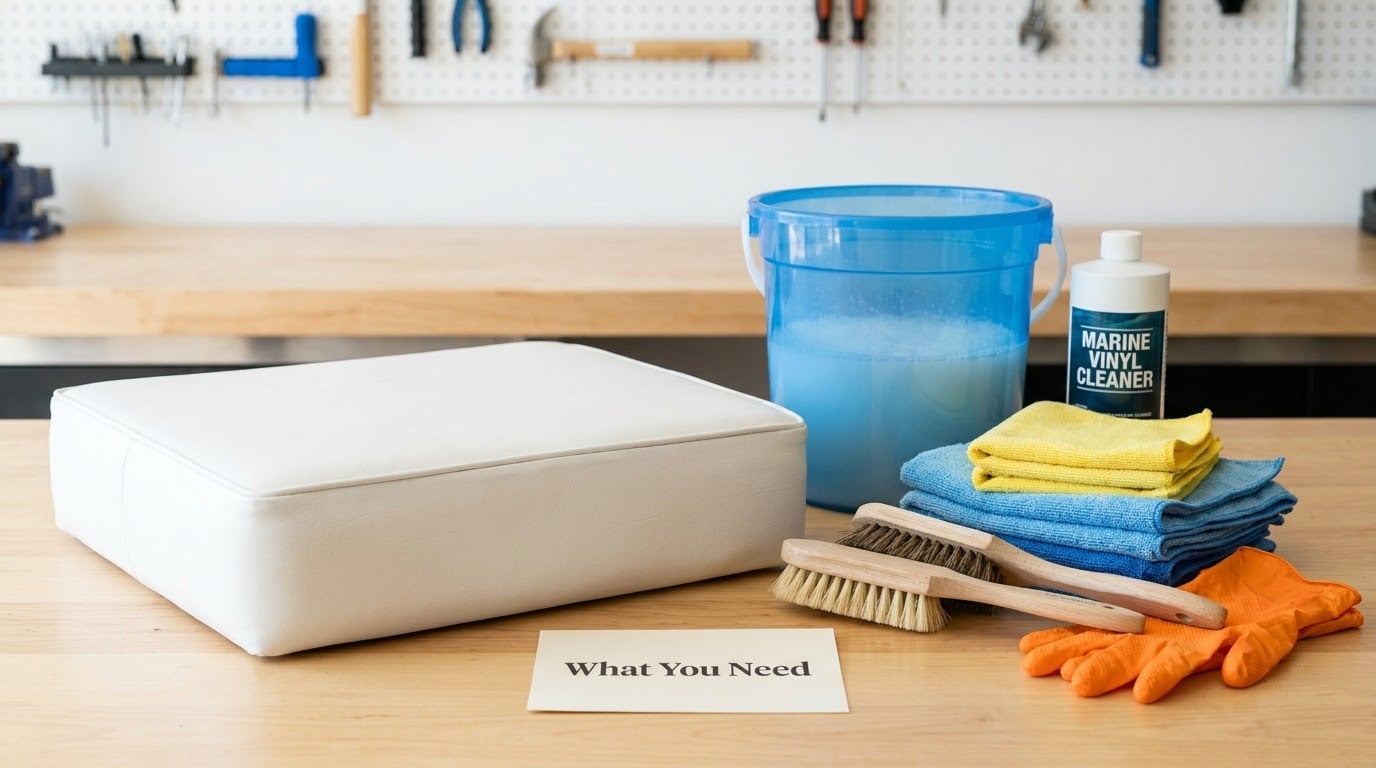
Gather everything before the seat gets wet. Cleaning a wet cushion with a dry cloth grinds salt crystals straight into the grain.
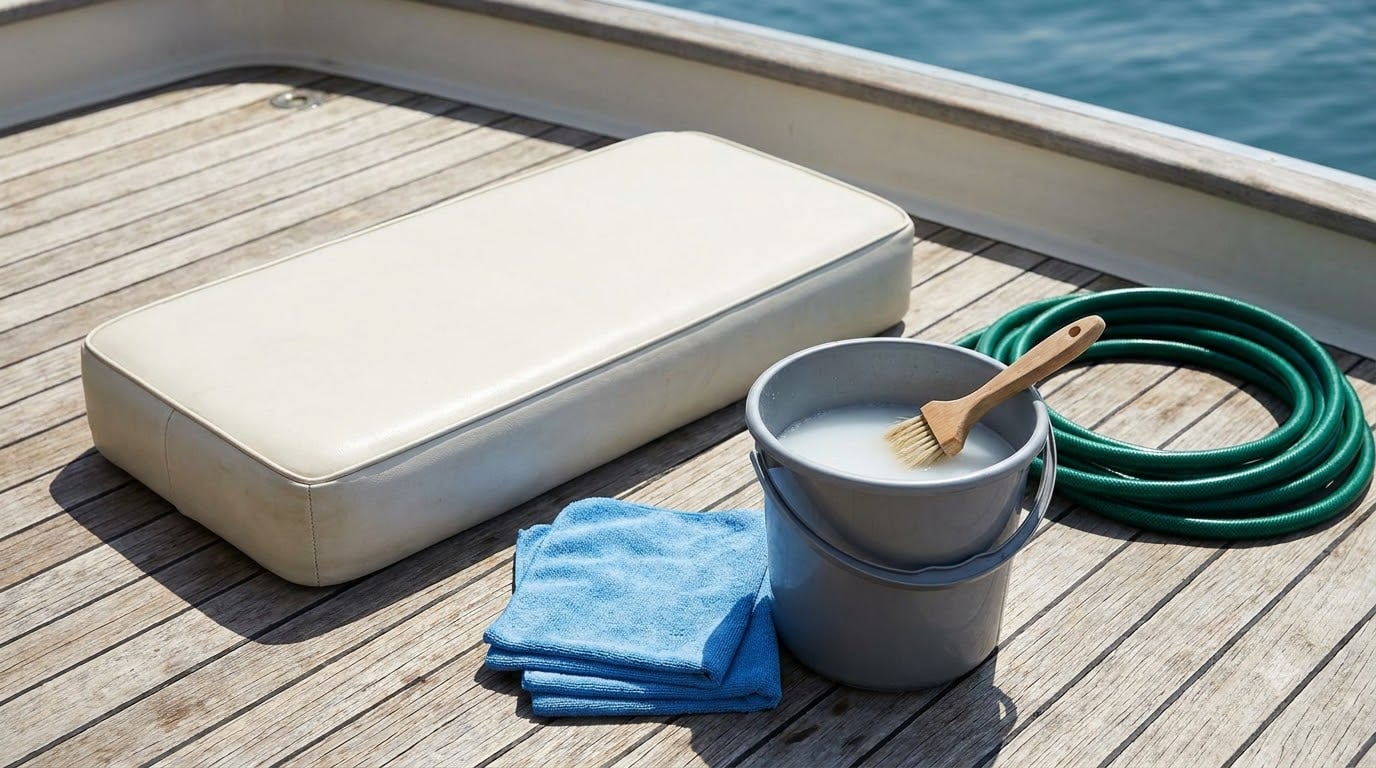
- Soft-bristle brush. A marine deck brush or soft upholstery brush. Not a dish brush, not a stiff deck brush.
- Boat eraser or non-abrasive pad. A dense closed-cell foam pad. Skip the yellow Magic Eraser and anything labelled melamine; that is a sanding sponge.
- Microfiber towels. At least two, for drying. Cheap lint-free towels hold grit and scratch.
- Bucket and garden hose. A gentle nozzle setting matters more than pressure.
- pH-balanced marine vinyl cleaner. Starbrite Ultimate Vinyl Clean, 303 Multi-Surface Cleaner and Boat Bling Vinyl Sauce are the ones owners name most often on iBoats and Club Sea Ray threads.
- Mildew stain remover. Starbrite Mildew Stain Remover, Iosso Mold & Mildew Stain Remover or a BioKleen marine mould remover, kept separate from your general cleaner.
- UV protectant. 303 Aerospace Protectant is the most repeated recommendation across the forums for the final sealing step.
- Nitrile gloves and a hand blower or small fan. Drying is the step people skip and the step that decides whether mildew comes back.
Step-by-Step: The Five-Stage Method
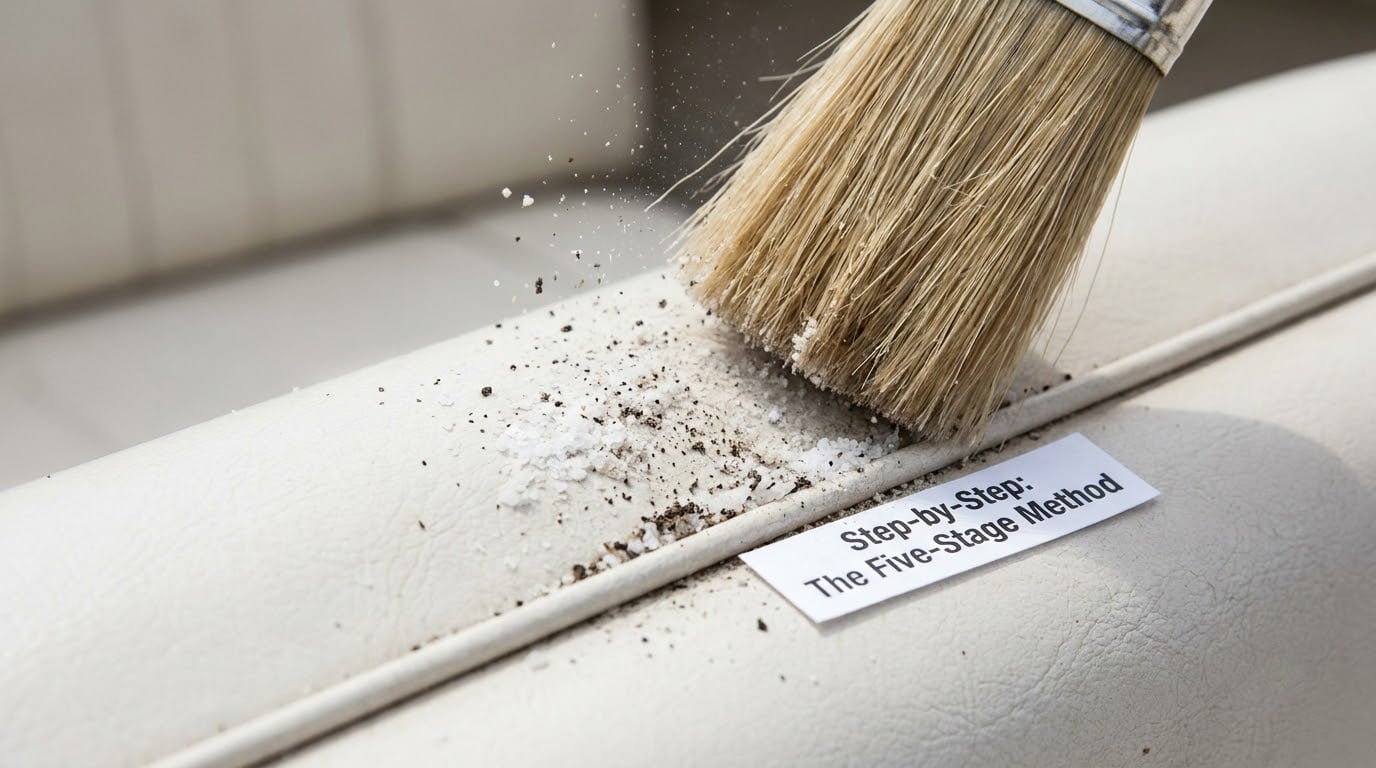
1. Pre-rinse. Hose the seat down with plain freshwater until the runoff stops looking grey. Every bit of grit you remove now is one you will not grind into the grain later.
2. Apply cleaner and let it dwell. Dilute the cleaner to the label ratio in a bucket, apply it in small sections, and leave it 10 to 20 minutes. That dwell time is where the surfactant does the work on sunscreen, body oil and salt. Skipping it is why people scrub twice as hard and still leave a film.
3. Agitate gently. Work the surface with the soft brush in small overlapping circles, then pay attention to seams, grain and stitching lines. You want the solution coming up grey, not the vinyl wearing down. Progress looks like the water turning milky and the grime lifting before you rinse.
4. Rinse completely. Flood the section with freshwater until the water runs clear. Any cleaner left behind keeps attracting dirt and can leave the surface sticky, which is worse than the stain you started with.
5. Dry and protect. Towel the surface down, then move air across it with a fan or blower until it is completely dry to the touch, including inside the seams. Once dry, apply the UV protectant in thin coats and buff off the excess.
How to clean boat vinyl seats without harsh chemicals
Marine vinyl survives on its polyurethane coating, and harsh chemicals strip that coating. Once it is gone, the PVC underneath yellows, cracks and goes brittle in a single season.
Before anything touches the seat, test it in a hidden seam or under a cushion edge and wait 24 hours. Look for dulling, color shift or a sticky patch rather than waiting for visible damage, because damage does not announce itself.
Dilute to the manufacturer’s ratio and no further. Simple Green at roughly 50/50 with warm water is the most commonly reported home method that works well; a small amount of Dawn dish soap in a gallon bucket of water is the other, used twice a year by owners who report no lasting harm.
Work one section at a time and keep the cushion from soaking. Seams and stitching are where liquid pools, and standing cleaner in a seam is the most common route to mildew coming back. Never clean in direct hot sun; the film bakes on and you get streaks you cannot shift.
How to remove stubborn stains from boat vinyl
Match the treatment to what the stain actually is. Owners often attack red or pink growth as if it were mildew, then wonder why a second round makes it worse.
- Sunscreen and body oil. The gentlest job. Marine vinyl cleaner with a full dwell and light brushing usually takes it. Degreaser-based products help on heavy grease, but keep them off the stitching.
- Rust from dock hardware or drains. Start with the same cleaner. If it survives, an owner-suggested option is a chelating rust remover designed for fiberglass gelcoat, spot-tested first on a hidden seam. Keep it off white stitching and rinse the area twice.
- Black mildew. Move to the dedicated mildew stain remover: apply, dwell 15 to 20 minutes, agitate with a brush, rinse. Repeat once rather than escalating to something harsher.
- Red or pink growth in the grain. Often a bacterial or algae bloom rather than true mildew. Chlorine-based mildew removers knock it back; keep the treatment short and follow with protectant.
- Dye transfer from a neighbouring cushion. Unpredictable. Isolate the cushion and work it separately with a pH-balanced cleaner. Deep dye that has soaked into the grain rarely comes out entirely.
Accept that some stains are cosmetic. If a sunscreen mark fades 80 percent and the vinyl underneath is supple, stop there. If the surface feels chalky after any cleaning, further scrubbing is removing material, not dirt.
How to dry and condition boat vinyl seats
Drying is where this job is won or lost. Vinyl left to air dry traps moisture in the cushion, and that trapped moisture is the mildew breeding ground people blame on the upholstery.
Towel first, then move air. Wipe the cushion down with a dry microfiber towel to remove surface water, then run a fan or blower across it until it is dry to the touch inside the seams and creases. On a humid day this takes longer than you expect, which is fine. Full dry-down before a cover goes on is non-negotiable.
Avoid waxes, oils and silicone-based products. They make the seat slick, which matters on a moving boat, and silicone residue traps dirt and blocks any future protectant from bonding.
Use a vinyl conditioner only when the vinyl manufacturer recommends one. A conditioner restores some suppleness to faded vinyl and is genuinely useful on seats that have gone stiff in storage. Skip it on any seat someone will stand or slide on, and skip it entirely if the surface feels greasy afterward.
For prevention, apply a UV protectant once or twice a year and rinse with freshwater after every saltwater trip. Salt crystallises in the grain and stitching, and it is abrasive the next time someone sits down.
Common Mistakes That Damage Boat Vinyl
Most of the contradictory advice in the boat forums comes down to people skipping dilution and dwell time, then blaming the product. Here is what to avoid and what to do instead.
| Mistake | What it does | Do this instead |
|---|---|---|
| Pressure washing at close range | Forces water into seams and blasts the grain, driving dirt deeper | Use a hose at a gentle stream, or a foam sprayer with no pressure |
| Undiluted bleach or ammonia | Strips the UV coating, dries the vinyl and attacks the stitching thread | Keep bleach out entirely; use a labelled mildew stain remover |
| Magic Eraser or melamine sponge | It is a sanding sponge and leaves permanently scuffed, dull vinyl | Use a dense non-abrasive foam pad for stubborn spots |
| Abrasive powders such as Soft Scrub | Scrubs off the protective topcoat and any colour left on the surface | Neutral pH cleaner plus patience |
| Stiff bristle brush | Roughens the surface so it holds dirt faster than before | Soft marine brush with light pressure |
| Cleaning in direct hot sun | Bakes cleaner on and leaves permanent streaks | Shade, or work in the cool of early morning or late day |
| Leaving seats to air dry | Trapped moisture in the foam is the number one cause of returning mildew | Towel, then fan or blower until fully dry |
| Covering a damp boat | Seals moisture in for weeks | Dry the seats first, and ventilate the boat covered |
| Thick or sticky cleaner left un-rinsed | Traps more dirt than the original stain | Rinse until the runoff runs clear |
On the bleach question specifically: owners split roughly in half in forum threads, and both camps are half right. A very dilute solution kills surface mildew, and concentrated bleach takes the coating and the thread with it. There is no ratio or dwell time that makes an untreated bleach application a good idea on vinyl, which is why the mildew remover category exists.
Vinegar is worth an honest verdict. A 50/50 vinegar and water mix is reported to work on light surface mildew, and Boating Magazine’s own comparison found it clearly behind bleach and behind a dedicated chlorine-free remover. It is a mild trial cleaner, not a mildew solution.
When to Replace Damaged Boat Vinyl Seats
Sometimes the honest answer is that the cushion is finished. Cleaning a compromised cushion is cosmetic work with an expiry date.
Do the suppleness test. Press a thumb firmly into a hidden area. Good vinyl springs back and feels slightly tacky. Vinyl that stays compressed, feels waxy, or cracks at the creases has lost its plasticizer and will not recover from cleaning.
Replace rather than clean when you see any of these:
- Cracks that have opened all the way through the surface layer, especially across a seating area
- Peeling or flaking topcoat, which shows as lighter patches that no cleaner lifts
- Deep splits along seams or split stitching, which means the foam inside is exposed
- Mildew that has gone into the foam and comes back within weeks of a successful surface clean
- Widespread yellowing across multiple cushions, which is plasticizer breakdown, not dirt
The foam is the reason stains keep returning. Surface cleaning kills what it touches, but a saturated cushion dries slowly from the inside, so the growth reappears in the same place. If the stain returns the same way twice, replacing the foam is the only durable fix.
If you are shopping for replacements, two specs matter. Vinyl weight is quoted in ounces per square yard, and heavier marine vinyl outlasts lighter; Boating Magazine points to roughly 28 ounces per square yard as a reasonable target. The second is fungal resistance, often rated to the ASTM G21 standard or sold as an anti-fungal or mildewstat-treated coating. That is the spec that stops you repeating this article in three years.
Dispose of old cushions through a local upholstery shop or a textile recycling program. Foam and treated vinyl rarely go in household waste, and a marine canvas shop will usually handle removal if it is taking the replacement cushions anyway.
Frequently Asked Questions
Can I use a pressure washer to clean boat vinyl seats?
Avoid it at close range. The pressure drives water into seams and stitching and can blast the vinyl grain, embedding dirt rather than lifting it. If you want to use one, stay six feet or more away, use the widest fan, and treat it as a pre-rinse only, with cleaning still done by hand. A garden hose at a gentle stream is the safer and more common choice.
What is the safest cleaner for marine vinyl upholstery?
A pH-balanced marine vinyl cleaner used at the label dilution, after a spot test in a hidden seam with a 24-hour wait. Starbrite Ultimate Vinyl Clean, 303 Multi-Surface Cleaner and Boat Bling Vinyl Sauce are the ones owners recommend most on iBoats and Club Sea Ray threads. Keep bleach, ammonia, alcohol and abrasive powders off vinyl entirely, since they strip the protective polyurethane coating.
How do I remove salt stains from boat vinyl seats?
Salt is the easiest of the four jobs on a boat seat. Hose the cushion with freshwater, then work a marine vinyl cleaner in with a soft brush and let it dwell for 10 to 20 minutes before rinsing. Rinse until the runoff runs clear and towel the seat down rather than letting it dry. The real prevention is a freshwater wipe after every saltwater trip, because dried salt crystals act as abrasive under the next person who sits down.
Should I use a vinyl conditioner on boat seats?
Only when the vinyl manufacturer recommends one, and never on a seat someone stands or slides on. Conditioner adds back some suppleness to faded or storage-stiff vinyl and can be worth it on a cockpit bench. Skip waxes, oils and silicone products: they leave the surface slick on a moving boat, trap dirt, and block later protectant from bonding. If the cushion still feels greasy after buffing, you have used too much.
Can mildew on boat vinyl be removed without replacing the seat?
Often yes for surface growth, rarely if the foam is contaminated. Apply a dedicated mildew stain remover, let it dwell 15 to 20 minutes, agitate with a soft brush and rinse, then dry the cushion thoroughly with a fan before covering. If the stain returns in the same spot within a few weeks, the foam is still damp inside and replacement is the durable fix. Prevention is a dry-down before every cover, plus ventilation once the boat is covered.
Conclusion
The safest first move is boring: identify what the vinyl is, test any cleaner in a hidden seam and wait a day, lift the loose salt off dry with a soft brush, then work a diluted pH-balanced cleaner with a full dwell time. Ditch anything harsh or slippery, dry the seats down properly instead of leaving them to the sun, and seal them with UV protectant once they are dry. That routine is what keeps a cushion supple instead of cracked.