The short answer: haul the boat out when you can, and when you can’t, use non-abrasive tools with a biodegradable, phosphate-free cleaner while capturing every bit of loosened growth before it drifts. That is how to clean a hull without harming water, and for most boats it takes an afternoon with a soft brush, two buckets and a containment boom.
A hauled-out clean with a hose and hand brushes runs two to four hours for a boat up to about 25 feet. Working in the water with a pole takes longer and needs calm conditions, and a diver adds cost but reaches the areas a pole cannot.
Some boat owners never haul out. Liveaboards, seasonal mooring tenants and anyone without a trailer deal with the same constraint every season: growth has to come off, and it cannot go back into the lake. The difference between a responsible owner and a careless one is rarely effort. It is containment.
Table of Contents
- What You Need Before You Clean a Hull Without Harming Water
- Step-by-Step: Clean the Hull Without Polluting the Water
- Common Mistakes That Harm the Water and the Hull
- How to Choose a Boat-Lifting Method for Cleaner Washing
- How to Dispose of Captured Growth and Wash Water
- Frequently Asked Questions
- Can I pressure wash a boat hull without harming the water?
- Is vinegar safe for cleaning a boat hull?
- How often should a boat hull be cleaned of marine growth?
- What should I do if a marina or launch site has no wash-water rules?
- Does cleaning a hull near a storm drain harm waterways?
- Can I use bleach to remove algae from a boat?
- Conclusion
What You Need Before You Clean a Hull Without Harming Water
Every item here exists to stop three specific things: debris entering the water, sediment going down a drain, and a tool gouging the coating. Bring the full list even for a short in-water session.
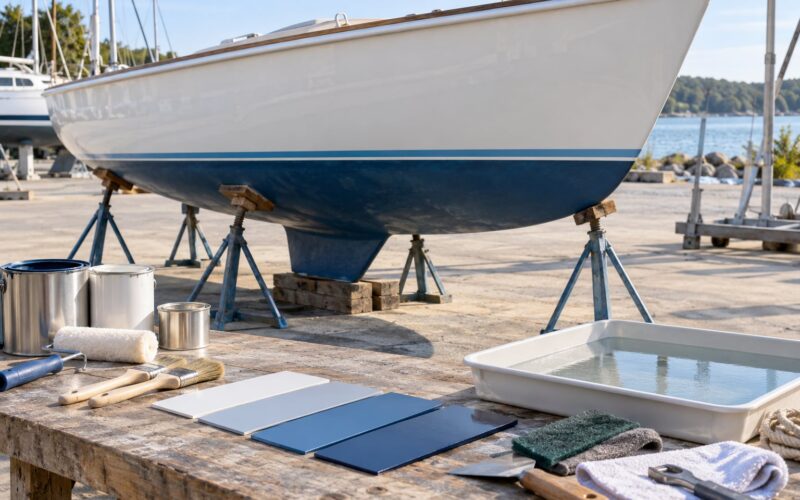
- Soft-bristle hull brushes — natural bristle or nylon, never wire. They lift a fouling film without cutting gelcoat, and gelcoat does not grow back.
- Plastic scraper and non-scratch pads — for barnacle bases and crusty patches. Metal scrapers, steel wool and abrasive pads etch gelcoat, and every scratch becomes a fouling site for the next season.
- Two buckets and a grit guard — one bucket for clean rinse water, one for soapy solution with a grit screen at the bottom. Sand and grit act like sandpaper when dragged across a hull.
- Biodegradable, phosphate-free boat soap — pH-neutral, labelled for marine use. Skip anything listing phosphates, chlorine, ammonia or solvents.
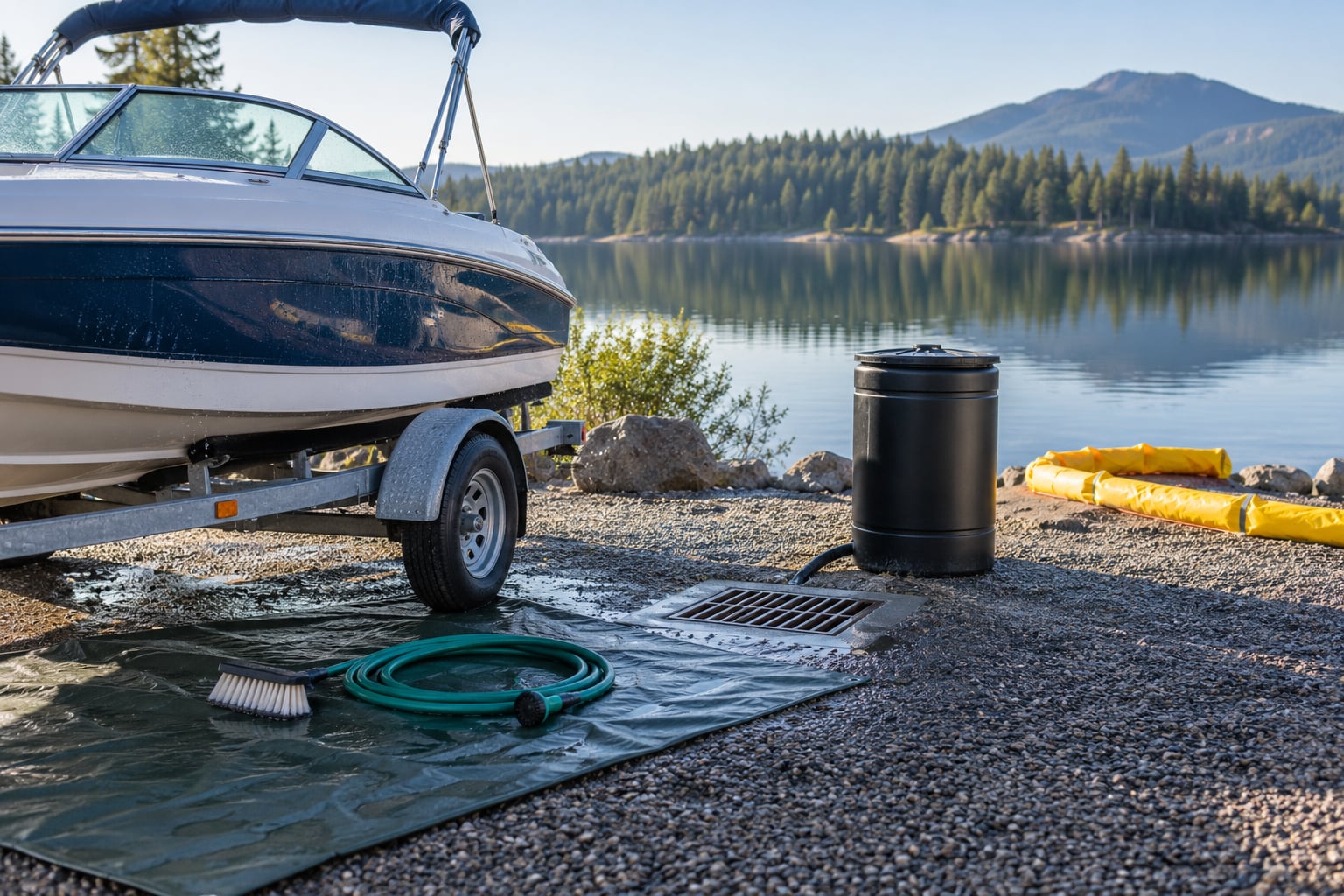
- Containment boom or sponge — a floating curtain, an absorbent mat or a ring of soak-up pads set around the working area. This is the item people skip and then regret.
- Drain covers and a collection container — for wash pads with a storm drain in the middle. Closed drums or sealed totes for captured water.
- Garden hose with a wide, low-pressure nozzle — no trigger sprayers, no concentrates sprayed straight at the hull.
- Microfiber towels — to dry the topsides so water spots do not set.
- Personal protective gear — chemical-resistant gloves, eye protection, non-slip boots, and a personal flotation device for anyone in or over the water.
Step-by-Step: Clean the Hull Without Polluting the Water
Work in this order. The first two steps are the ones that keep the water clean, and they come before any soap touches the hull.
How to check local water-protection rules before cleaning
Start at the source. Ask the harbormaster or launch-site operator in writing, by email or message, what is permitted, and keep the reply. Posted signage at the ramp is a good sign, not proof.
Three layers of rules stack here. The marina or harbor authority may ban any discharge from the slip, require use of a designated wash area, or restrict washing to certain hours. Your state may run an in-water cleaning permit or general permit program that sets conditions on hull cleaning and antifouling paint work, often under Clean Water Act authority. Federal Clean Water Act rules on point-source discharge apply when water is routed to a navigable water through a pipe or drain.
You will know the check worked when you can point to a rule, a sign or a written answer and say what you are allowed to do with the water. If nobody can tell you, treat the launch ramp and the storm drain as closed.
How to contain wash water and prevent runoff
Set containment before the boat is wetted. On land, work over a wash pad and cover the drain with a mat or a weighted cover. At a dock, close a floating boom around the boat and pack the perimeter with absorbent pads so nothing loose floats free.
Watch where the water actually goes rather than assuming. Note the tide or lake level, the wind direction and where the nearest drain or shoreline sits, then place the boom on the upstream side. A containment check passes when you can pour a small amount of soapy water at the hull and watch it stay inside the ring.
How to clean loose growth with a soft brush without harming water
Soak the growth first. Fresh water rehydrates a dried fouling film, and a hydrated film releases from gelcoat with far less scrubbing. Then work a soft brush or non-scratch pad over a small panel at a time, moving bottom-up so dirty solution runs down into your bucket or containment area instead of up onto clean paint.
Use a plastic scraper on barnacle bases and crusty patches, keeping the blade flat so the edge doesn’t dig in. Never use a wire brush, steel wool or metal scraper, and never pressure wash over open water. Skip work near nests, bait balls and any wildlife you disturb; move to another section and come back later.
You will know it worked when the hull runs clean under a rinse with no loose residue in the water, and the surface shows no scratches, no dulled gelcoat and no fresh coating damage.
How to use a hull-safe cleaner only when necessary
A brush and water handle most routine fouling. A cleaner earns its place when you have a heavy algae film, a rainbow diesel sheen, or a scum line that will not move under a brush.
Choose a product labelled for marine use, biodegradable, phosphate-free and pH-neutral, and dilute it in your bucket rather than spraying concentrate on the hull. Follow the label’s dwell time, then rinse with the low-pressure nozzle into your contained area. Never mix products, and never pour a concentrate straight onto the water as a shortcut.
Mechanical cleaning first is not just gentler on the coating. It is the difference between a bucket of soapy water you control and a plume of diluted chemical you do not.
How to rinse and inspect the finished hull
Rinse from the bottom up with the hose at low pressure, keeping the stream inside your containment area. Then drag a wet microfiber towel down the topsides, and inspect the coating in good light for scratches, soft spots, blistering or exposed antifouling.
Check the water inside your boom before you take it down. Clear water with no foam, no oily sheen and no visible brown plume means the process stayed inside the ring. Release water, then bag the collected solids, and finish with a wax or polymer sealant to make the next clean easier.
Common Mistakes That Harm the Water and the Hull
Each of these is a habit, not a one-off, and each has a straightforward correction.
- Pressure washing over open water. A high-pressure jet strips antifouling paint and sends copper-laden sediment straight into the lake. Use a hose and a brush, or pressure wash only on land over a contained pad, below about 2,000 PSI, with a wide fan held at least two feet away.
- Bleach, ammonia or glass cleaner on growth. Chlorine and ammonia kill more than the algae and form harmful by-products in water. Use a biodegradable, phosphate-free boat soap instead, or plain water and brush work.
- Dish soap. It works, then it goes downstream. Dish detergents carry phosphates that feed algal blooms and surfactants that coat gills and drive dissolved oxygen down. Many also carry a chlorine substitute.
- Scrubbing antifouling paint underwater. Copper and other biocides in bottom paint are toxic to the organisms you are trying to protect. Clean above the paint line with tools, and hand off any paint work to a yard with containment.
- Metal tools. A wire brush or steel wool gouges gelcoat and aluminum, and every gouge becomes a growth site. Use plastic scrapers and non-scratch pads.
- Washing at the wrong tide or in the wrong spot. Water flowing past a shoreline, dock or outlet carries everything you loosened. Work at slack water, on the contained side, with the wind behind you.
- Ignoring marina rules. Being asked to move on costs more time than asking first. Get the answer before the bucket comes out.
- Moving between water bodies without decontaminating. Zebra and quagga mussels ride on hulls, trailers and docks. Clean, dry and scrape gear before launching in a different lake.
How to Choose a Boat-Lifting Method for Cleaner Washing
The lifting method decides how much of your wash water you can control. A boat in a cradle over a reclaim pad can be rinsed freely. A boat in the water cannot, so containment has to do the work instead.
| Method | Runoff control | Best suited to | Watch out for |
|---|---|---|---|
| Travel lift or yard cradle on a wash pad | Excellent, with drain covers and reclaim | Most boats up to about 30 feet, seasonal deep cleans | Coating damage from slings, sand left in cradles |
| DIY trailer or cradle at home | Good, with a gravel or pad surface and a drain cover | Trailered boats and small craft | Grit from the trailer frame, grass runoff |
| Wash-down station with reclaim water | Excellent by design | Liveaboards and boats without a trailer | Filter capacity, need to empty the tank |
| In-water cleaning with a pole and boom | Fair, entirely dependent on containment | Boats that never leave the water | Limited reach, drift in wind, marina rules |
| Diver or remote cleaning robot | Fair to good with a sponge head and boom | Deep drafts, areas a pole cannot reach | Paint on the sponge, cost per visit |
If your boat fits the first three rows, clean on land. It is less weather, better access to the whole hull, and the only way to catch every drop of water you generate.
How to Dispose of Captured Growth and Wash Water
Treat captured material as waste, not as something nature will absorb. Barnacles, mussels and algae carry whatever was on the hull, including copper from bottom paint, and that load does not disappear because it looks like seaweed.
Bag or bin solids in a sealed container and dispose of them through your local waste system according to local rules. Never scatter growth overboard, and never dump collected water into a lake, a bay or a storm drain even when it looks clear. Pour it into a sanitary sewer or a wash-station reclaim tank only where that is allowed, and empty it rather than leaving it standing.
Spread a tarp or drop cloth under the work area to catch drips and shed debris, then fold it into the solids container. If you spot an oily sheen after the job, stop and report it to the marina or the local spill line instead of washing it away.
Frequently Asked Questions
Can I pressure wash a boat hull without harming the water?
Pressure washing a hull that is in the water strips antifouling paint and releases copper-laden sediment directly into the lake. On land, over a contained wash pad, a wide fan nozzle under about 2,000 PSI held at two feet or more will clean a hull without stripping coating. Everywhere else, use a hose and a soft brush.
Is vinegar safe for cleaning a boat hull?
White vinegar diluted roughly 1:1 with fresh water is a mild, non-toxic option for waterline scum lines and light mineral staining on fiberglass and gelcoat. Spray it, let it dwell a few minutes, scrub with a soft brush, then rinse thoroughly. Never use it on aluminum, on coated surfaces or on natural teak trim, and never mix it with bleach.
How often should a boat hull be cleaned of marine growth?
Check the hull monthly in saltwater and every few weeks in warm freshwater, since algae grow faster in nutrient-rich water. Give the hull a full wash at least twice a season in salt and once a year in fresh water, plus a rinse after every trip in dirty or brackish water. Light film can be handled by hand; a thick, soft layer needs a full clean sooner.
What should I do if a marina or launch site has no wash-water rules?
Ask the harbormaster or site operator in writing and keep the reply. If no written answer is available, take the conservative route: no discharge into the water, no draining toward a storm drain or shoreline, and wash only over a designated pad with the drain covered. Some states run in-water cleaning permit programs, so check your state environmental agency before starting.
Does cleaning a hull near a storm drain harm waterways?
Yes. Storm drains usually lead straight to a lake, river or bay, so soapy water, loose algae and paint sediment entering one ends up in that water body. Cover the drain with a mat, work on a wash pad if the site has one, and collect rinse water in closed containers. When in doubt, take the boat to a yard with a reclaim system.
Can I use bleach to remove algae from a boat?
Bleach kills algae on contact and damages gelcoat, fittings and marine life just as fast. It also forms harmful by-products in water. Use a biodegradable, phosphate-free boat soap with a soft brush instead, contain the rinse water, and keep the coating rinsed afterward. Reserve chlorine products for equipment sanitation, not hull washing.
Conclusion
The safest first move is not picking a brush. It is asking the marina what you may do with the water, and confirming it in writing before you start.
Then clean on land if you can, contain everything if you cannot, keep to soft tools and phosphate-free biodegradable soap, and bag the debris instead of pushing it off the hull. That sequence protects the coating you paid for, the growth you cannot scrub off, and the water you are borrowing for free.
Rules and permit conditions change, so check your state program and your marina for 2026 before launching into any project.