Mildew comes off boat seats with a short escalation ladder: start with a 1:1 white vinegar and warm water mix, leave it 15 to 20 minutes, scrub gently, rinse and dry. If spotting survives, step up to a marine mildew cleaner, use a baking soda paste on what is left, and save diluted bleach for white vinyl only. Most light mildew takes 30 minutes and a soft brush. A seat that has been wet under a tight cover for a month is a different job.
Two things decide whether this works. The first is knowing what the seat is made of, because marine vinyl and woven fabric react differently to the same cleaner. The second is getting it dry, because a damp cushion under a cover is an invitation the fungus never declines.
Table of Contents
- What You Need
- Step-by-Step: How to Get Mildew Off Boat Seats
- Common Mistakes
- Frequently Asked Questions
- Can I use vinegar to get mildew off boat seats?
- Is bleach safe for mildew on boat seats?
- How do I remove mildew stains from marine vinyl seats?
- What should I do if a boat seat still smells like mildew after cleaning?
- Can I clean a boat seat cushion without removing it?
- When should I replace a boat seat instead of cleaning it?
What You Need
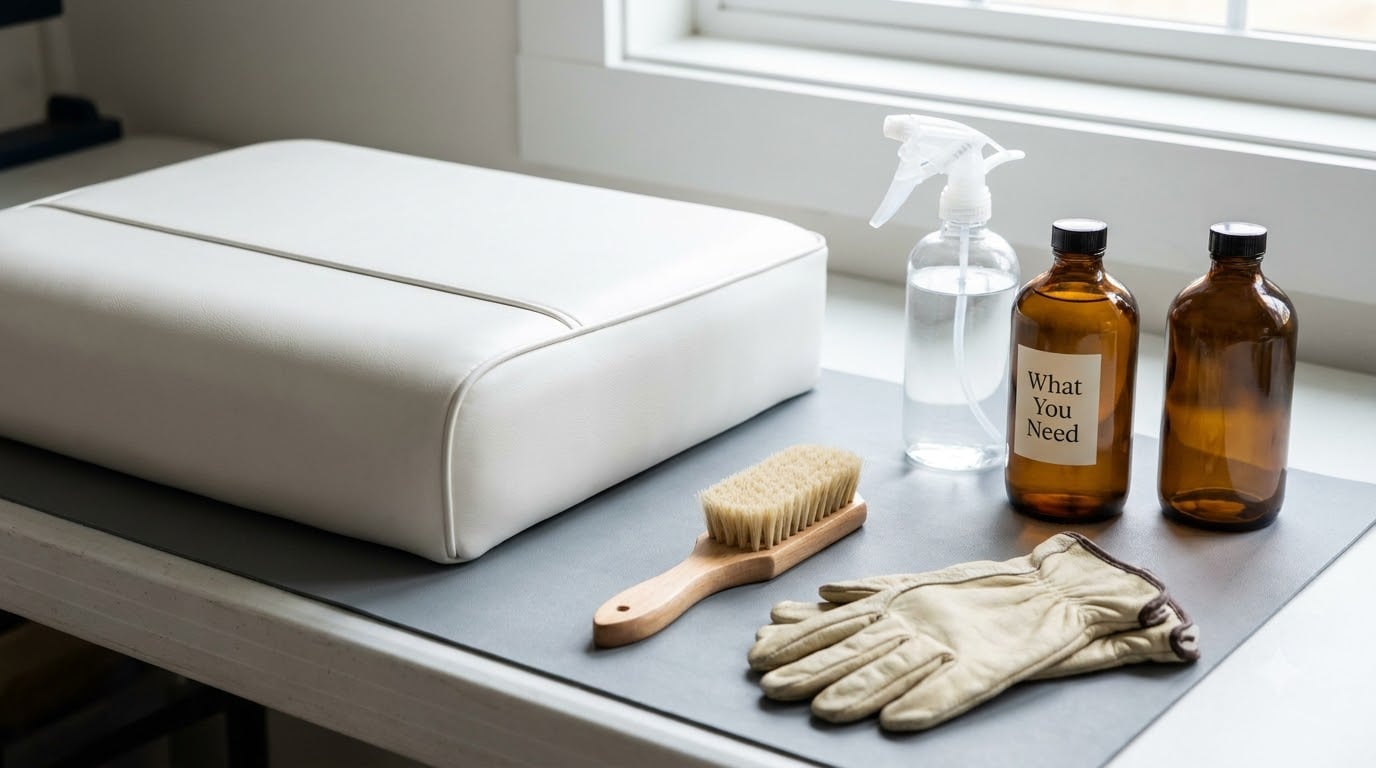
Gather everything before you start. Halfway through a job with no dry cloth handy turns a five-minute cleanup into a bigger one.
- Material ID: a flashlight, a magnifying glass or your phone camera, and the upholstery tag from under the cushion if it is still attached.
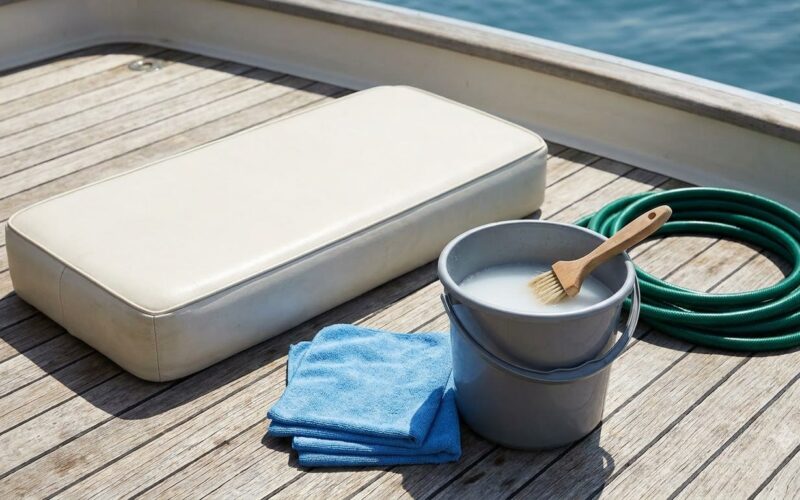
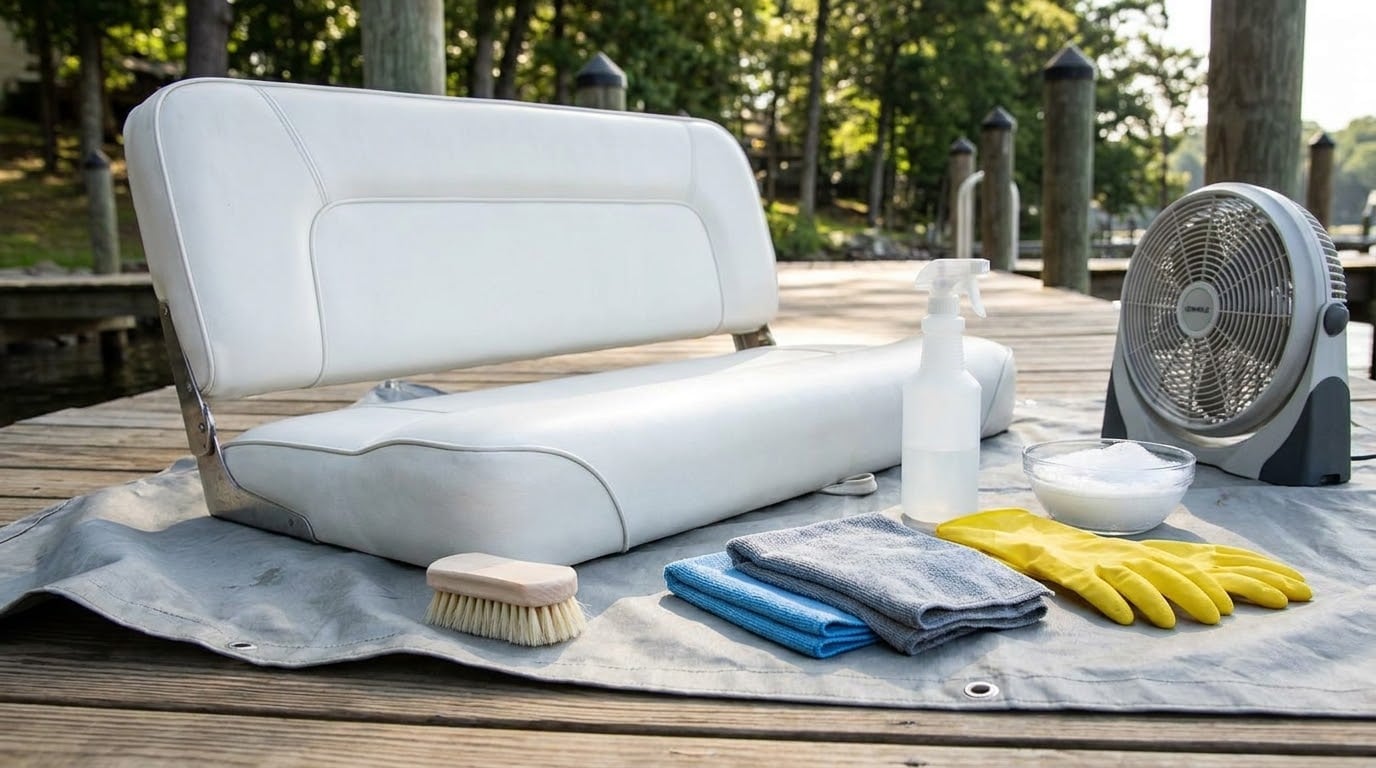
- Cleaning solutions: white distilled vinegar, warm water, mild dish detergent, and a marine mildew cleaner such as Marine 31, Starbrite or CLR Mold and Mildew Clear.
- Application: a spray bottle, and clean white towels for the soak-pad technique.
- Agitation: a soft-bristle brush. A plastic grout brush works on stubborn vinyl if you keep the pressure light.
- Wiping and rinsing: microfiber cloths and a bucket of fresh water.
- Drying: a fan or blower, a shaded spot with moving air, and absorbent towels.
- Protection: rubber gloves, eye protection and an N95-style mask, plus a vinyl protectant for the follow-up.
Step-by-Step: How to Get Mildew Off Boat Seats
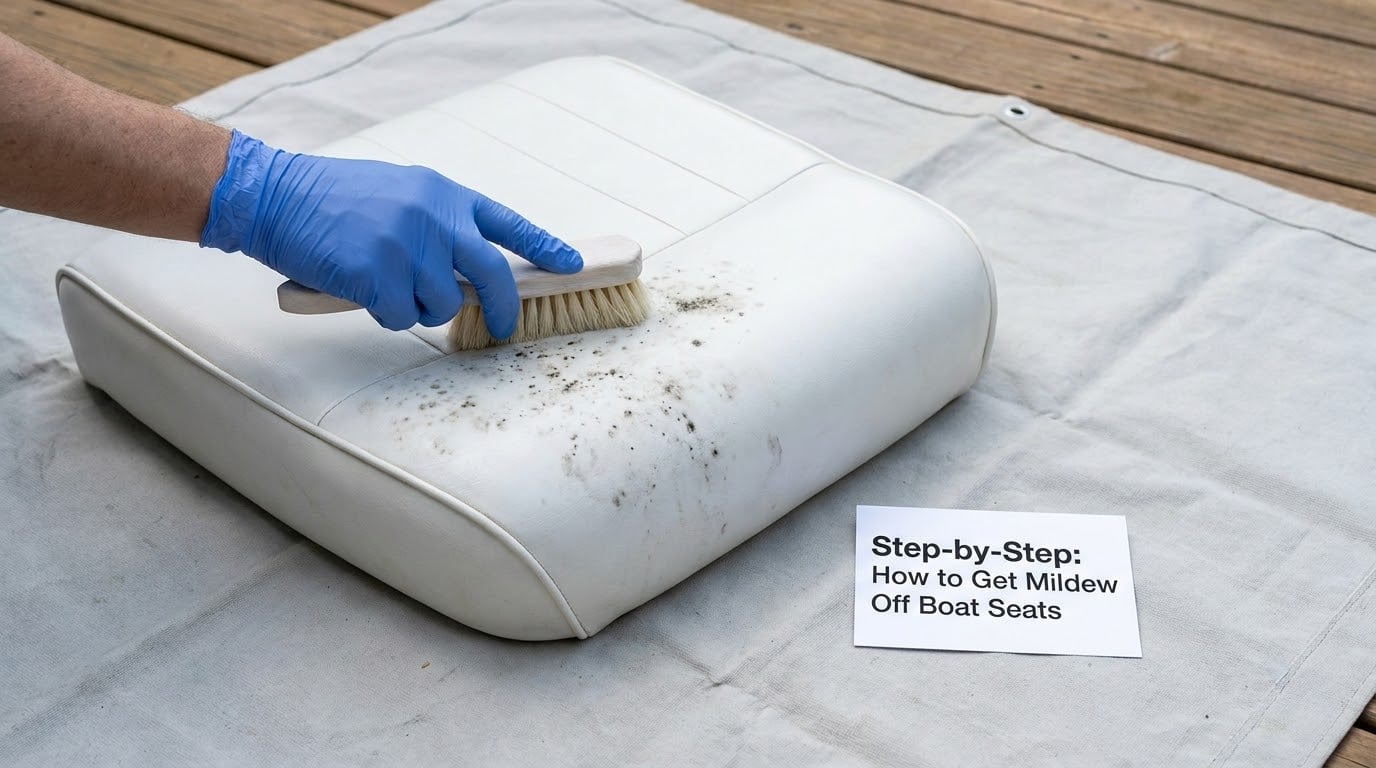
Work through these in order. The order matters, because each step assumes the one before it has dried.
Identify the Seat Material Before Cleaning
Marine vinyl is a plastic skin with a clear protective topcoat, and that coating is what bleach and solvents attack first. Woven polyester or acrylic feels like fabric, has a slightly dull surface, and often lets you see a tag stitched into the seam.
Look at the piping, the stitch holes and any sunlight hitting the surface. If the seat feels leathery and smooth, treat it as vinyl. If the material flexes without creasing, or a seam has frayed threads, treat it as fabric. Unknown material gets the gentlest method only, and a patch test before anything else.
Move the Boat or Seat Into a Ventilated Area
Outdoors on a tarp, or in a garage with the door open. Mildew spores travel on air you cannot see, and a closed cabin turns a small job into a fogged-up windshield.
If the cushion lifts out of its pedestal or hinges, take it out. That is the single best thing you can do for the job, because you can then clean the underside, which is where a lot of the growth lives. Lay towels under the work area and keep the boat cover off until everything is bone dry. Keep kids and pets out of the space until the smell clears.
Test the Cleaner on a Hidden Area
Find a hidden spot: under a cushion edge, on the back of the helm seat, or inside a seam nobody sees. Apply the solution at working strength and wait the full dwell time you plan to use.
Stop if the color shifts, the finish goes matte or tacky, the topcoat lifts, or fabric feels stiff or slimy. On colored or patterned vinyl, be stricter than the label suggests. A product that passes on a hidden spot can still bleach a seat unevenly across a sun-faded cushion.
Loosen the Mildew With a Soft Brush
Dampen the surface first so you are not grinding spores into the vinyl dry. Then brush in one direction with light pressure, working the foam of the brush into the texture and the stitch lines rather than scraping.
Do this before the cleaner goes on as often as after. The goal is to lift the growth off the surface so the solution can reach what is underneath, not to scrub a stain into a finish.
Apply the Cleaner Without Soaking the Cushion
For the vinegar method, mix equal parts white distilled vinegar and warm water in a spray bottle. Spray the area, let it sit for 15 to 20 minutes, and keep it visibly damp.
For a commercial marine mildew cleaner, follow the label dilution and give it the stated dwell, usually 10 to 20 minutes. Work in sections of about two feet square rather than the whole boat at once, so nothing dries before you get back to it.
Watch the seams. Liquid running down a stitch line soaks the foam, and wet foam under vinyl is exactly the condition you are trying to end. Keep a dry towel at the bottom of the cushion to catch runs. Never flood a seat that has wiring, a heater, a transducer or a pedestal connection running through it.
For stubborn black spotting, the soak pad is worth trying. Soak a clean white towel in the solution, lay it flat on the stain, and cover it with a second damp towel so nothing evaporates. Give it 10 minutes, then brush and rinse.
Rinse and Blot the Upholstery
Wipe the section with a clean microfiber cloth dampened with plain water, then go over it again with a dry cloth until the cloth comes up clean. A light rinse from a garden hose works for removable seats, held at low pressure and away from any seams.
Do not use a pressure washer or a shop vac hose on a cushion. Both push water and cleaner straight into the foam where you cannot reach to dry it. Follow whatever your upholstery manufacturer says on the tag before you use any water at all.
Dry the Seat Completely
This is the step that decides whether the job holds. Stand the cushion on end so water drains away from the base, drape absorbent towels over it, and put a fan on it in shade.
Give it at least 24 hours, longer if the foam was damp to the touch. A hair dryer on cool works for seams if you keep it moving. Never put a wet cushion back under a boat cover or lay it flat in a closed storage shed. Trapped moisture in an enclosed space is how you get the same mildew back next month.
Inspect and Prevent Mildew from Returning
Check for a musty smell at the seams and around the base, and look for any remaining discoloration. If the smell is gone and the spots no longer spread, the growth is under control.
Then fix the conditions that produced it. Wipe down the seats after every use with soapy water and a microfiber cloth, and do not cover the boat while the upholstery is damp. If water collects in the boat, that is a separate problem worth solving on its own, whether that means a working bilge pump for a small boat or simply not parking the boat where it collects rain. A breathable cover with a vent gap does more than a tight one, and a protectant every four to six weeks keeps the topcoat intact.
Marine carpet is a common source. If the carpet under a seat smells musty, dry it or pull it and clean it separately, or the seats will keep getting reinfected. While you are at the boat, it is a good moment to handle the rest of the off-season list too, such as working through how to make a boat visible to other vessels before the season changes.
Common Mistakes
Using undiluted bleach. Straight bleach strips the topcoat and bleaches colored vinyl. Mix it to roughly 1 cup of regular chlorine bleach per gallon of water, keep the working strength under about 5 percent, and rinse well. Owners who use a low concentration report no stitching problems at all, which is why the anti-bleach and pro-bleach camps both sound confident.
Mixing cleaners. Bleach plus ammonia or bleach plus an acidic vinegar solution makes toxic gas. Never combine products, and never pour a second cleaner over a surface that has not been rinsed.
Soaking the foam. A saturated cushion takes days to dry inside. Keep the surface damp, not dripping, and protect the underside with a towel while you work.
Using high-pressure water. A pressure washer drives water into seams and the plywood base, where it does damage you will not see until much later. Use a cloth or a low-pressure hose.
Skipping the underside. A removable cushion can be flipped and cleaned on both sides. Growth that started in the foam comes back from below if you only ever treat the top.
Putting a damp seat under cover. Never. If you are cleaning it indoors, keep the cushion on its edge with a fan until it is completely dry, even if that takes an extra day.
Assuming any dark spot is still alive. Mildew can be dead and leave a permanent stain behind. Watch for spreading spots and odor rather than stain color alone, and expect some discoloration to stay even after a good cleaning.
Reaching for the wrong tools. Steel wool, Magic Erasers and acetone take the protective coating off marine vinyl, and the exposed surface stains faster afterward. Soft bristles and a cloth do the same job without the damage.
Frequently Asked Questions
Can I use vinegar to get mildew off boat seats?
Yes, for light surface mildew on marine vinyl, mix equal parts white distilled vinegar and warm water, spray it on, wait 15 to 20 minutes, then scrub with a soft brush and rinse with fresh water. Vinegar will not kill heavy growth that has grown out of the foam underneath, and it will not lift a stain that is already permanent. It is also not a disinfectant, so follow it with a marine mildew cleaner if spots remain.
Is bleach safe for mildew on boat seats?
Diluted bleach is safe on white vinyl if you keep the working mix under about 5 percent, roughly 1 cup of chlorine bleach per gallon of water, and rinse thoroughly afterward. Do not use it on colored or patterned vinyl, where it will lighten the color unevenly. Never pour it straight onto the cushion, never mix it with ammonia or acidic cleaners, and let it sit for no more than 5 minutes.
How do I remove mildew stains from marine vinyl seats?
Work in this order: a 1:1 vinegar and warm water mix with a 15 to 20 minute dwell, then a marine mildew cleaner such as Marine 31, Starbrite or CLR at the label dilution. Once the growth is gone, treat the leftover dark staining with a baking soda paste worked in gently and left for a few minutes. Some discoloration is permanent even after the fungus is dead, so set that expectation before you start.
What should I do if a boat seat still smells like mildew after cleaning?
The odor usually means moisture is still sitting in the foam or in the marine carpet underneath. Take the cushion out if it removes, stand it on end with towels and a fan in shade, and give it at least 24 hours. Clean and dry the carpet and the base of the seat as well. If the smell remains after a full dry, the foam has likely taken on odor and reupholstery is the honest answer.
Can I clean a boat seat cushion without removing it?
Yes, most fixed boat seats can be cleaned in place. Work in sections, protect the deck with towels, and keep liquid out of seams and any pedestal wiring or heater connections. The trade-off is that you cannot clean the underside, and mildew that grew out of the foam underneath tends to come back within a few weeks. Removing the cushion lets you flip it, dry the foam properly and treat both faces.
When should I replace a boat seat instead of cleaning it?
Replace it when the stain will not lighten after two or three cleaning attempts, when the stitching is broken or the seams have opened, when the foam stays wet or musty no matter how long you dry it, or when the topcoat is already stripped and the vinyl feels stiff or tacky. Reupholstery also makes sense if several seats are affected at once, since the whole set usually came from the same wet storage conditions.
Start with the vinegar mix, give it a real 15 to 20 minute dwell, and brush gently before you add anything stronger. That covers most of what shows up on boat seats. When you reach for the next step up, test it in a hidden seam first, keep bleach off colored vinyl, and give the cushion a full day of airflow before the cover goes back on. And if one seat came back smelly twice, the culprit is usually standing water in the hull rather than the upholstery, so chase the drainage before you re-clean anything.